English
 français
 Español
 русский
 português
 العربية
 Türkçe
 tiếng việt
 Burmese
Phone:
+8603175985777
 Hebei Changhua Star Vehicle Co.,Ltd.
WHAT ARE YOU LOOKING FOR?
Hebei Changhua Star Vehicle Co.,Ltd.
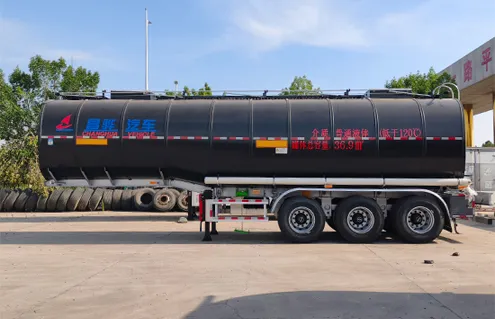
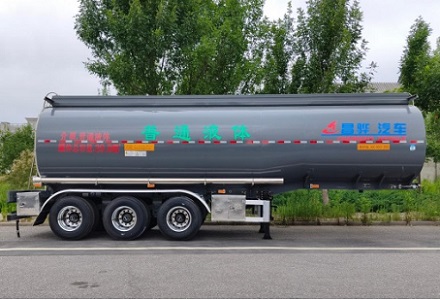
When purchasing a fuel tank trailer, buyers tend to compare visible specifications such as capacity, material, wall thickness, and chassis compatibility. Yet two critical features that directly affect operational safety and compliance costs are often overlooked: the vapor recovery system and the baffle structure designed to control liquid sloshing. For companies involved in fuel transportation, gas station operations, or industrial fuel storage, omitting these features can create safety hazards and lead to regulatory penalties and long-term financial losses.

A vapor recovery system does much more than reduce emissions of volatile organic compounds (VOCs). During fuel loading, unloading, and storage, vapor can mix with air to form a flammable atmosphere. If that mixture encounters an ignition source, the consequences can be severe. A complete vapor recovery system therefore relies on several coordinated layers of protection.
Under relevant industry technical specifications, storage tanks equipped with vapor recovery must also have a level-monitoring system with a high-level alarm. When the fuel reaches 90% of tank capacity, the system should trigger a high-level warning; at 95%, it should automatically stop filling. This arrangement is intended to prevent fires and environmental contamination caused by overfilling. When assessing tanker trailer manufacturers, buyers should therefore check whether vapor collection, high-level alarms, and automatic shutoff are designed to work together.
Vent piping is another critical part of the safety configuration. For gasoline tanks equipped with vapor recovery, the vent outlet should be fitted with a flame arrester as well as a pressure-vacuum relief valve. The recommended operating positive pressure is 2 to 3 kPa, while the recommended operating negative pressure is 1.5 to 2 kPa. A flame arrester prevents an external flame from traveling back through the vent line and into the tank. Under commonly recognized international standards, tanks used to store Class 3.1A, 3.1B, or 3.1C flammable substances must be fitted with flame arresters, and their installation must not reduce the vent opening’s discharge capacity.
From an environmental compliance perspective, the U.S. Environmental Protection Agency (EPA) sets vapor recovery efficiency requirements for petroleum liquid storage facilities. Storage vessels containing petroleum liquids with a true vapor pressure greater than 11.1 psia must be equipped with vapor recovery systems that reduce VOC emissions by at least 95% by weight. Vapor recovery is therefore not only a safety feature; it can also be a compliance threshold for accessing international markets.

If vapor recovery helps manage the risk of fire, baffles address the risks caused by liquid movement. When a tanker trailer turns or brakes, the liquid inside the tank can undergo intense forced sloshing. The resulting dynamic forces can significantly reduce lateral stability and braking performance. Accident data indicate that the dynamic impact forces and moments generated by liquid sloshing are associated with a noticeably higher accident rate for tank vehicles than for other freight vehicles.
Baffle design involves far more than simply adding a few partitions inside a tank. Recent research indicates that a suitable baffle configuration can increase a tanker’s fundamental sloshing frequency by 50% to 200%, helping reduce the risk of resonance. Under braking conditions, a tanker using a newer baffle structure can reduce the maximum force on the front tank head by 8.7% and the average force by 16.3%. These results mean shorter braking distances and greater driving safety.
In terms of materials and manufacturing, advanced baffles have evolved from simple flat plates to wave-shaped designs that dissipate energy in multiple stages. As fuel moves, it first strikes the troughs of the wavy baffle, then the crests, and finally passes through small openings before hitting a horizontal plate. Each interaction further dissipates the liquid’s energy. Research into floating anti-sloshing structures has also progressed: unlike conventional fixed baffles, floating structures can adjust their position according to the liquid level and are designed to maintain slosh-control performance at different fill ratios.
Baffle spacing also follows specific engineering requirements. According to relevant technical specifications, the distance between baffles must not exceed 1.5 meters. A central circular opening with a diameter of at least 30 centimeters is required, along with openings of at least 20 centimeters in diameter at both the upper and lower ends. Although these dimensions may seem minor, they directly affect the liquid’s flow path inside the tank and the efficiency of energy dissipation. For a carbon steel fuel tanker trailer, tank material is only one part of the safety equation; internal baffle geometry and liquid movement under braking deserve attention as well.

For fuel tank buyers, decisions about vapor recovery and anti-sloshing baffles are essentially decisions about hidden safety costs. A complete vapor recovery system integrates sealed vapor-collection piping, flame arresters, pressure-vacuum relief valves, high-level alarms, and automatic shutoff devices. Its engineering complexity and cost can be considerably greater than those of the tank body alone. Likewise, high-performance baffles require fluid-dynamics simulation, fluid-structure interaction analysis, and on-vehicle validation to deliver their intended slosh-control performance.
Regulatory expectations for safe fuel storage and transport continue to tighten in major markets. Canada has implemented new VOC-reduction requirements limiting VOC emissions from vapor recovery systems to no more than 10 grams per cubic meter. Performance testing standards for tanker-trailer baffles in the European Union and North America are also continuing to evolve. Buyers who focus only on tank capacity and purchase price may face additional costs later if equipment needs to be upgraded to meet applicable requirements.
A custom tanker trailer may need a safety configuration tailored to its cargo, loading facilities, and local operating rules. Buyers should discuss vapor collection, overfill protection, venting, baffle spacing, and validation requirements with suppliers before finalizing a specification. Including these items in the supplier evaluation process can help reduce avoidable operational risks and compliance costs.
In a fuel tank specification sheet, vapor recovery and anti-sloshing baffles may be among the least conspicuous entries, but they reflect fundamental safety principles across the fuel storage and transportation chain. For buyers taking a long-term view, treating these features as core criteria in supplier evaluation is not merely a compliance consideration; it is a practical way to protect operational safety and manage lifecycle costs.