English
 français
 Español
 русский
 português
 العربية
 Türkçe
 tiếng việt
 Burmese
Phone:
+8603175985777
 Hebei Changhua Star Vehicle Co.,Ltd.
WHAT ARE YOU LOOKING FOR?
Hebei Changhua Star Vehicle Co.,Ltd.
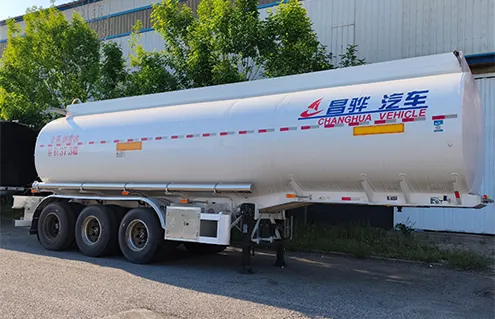
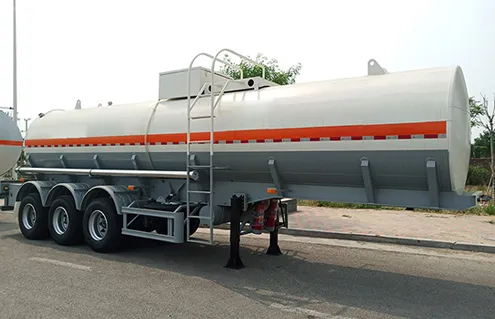
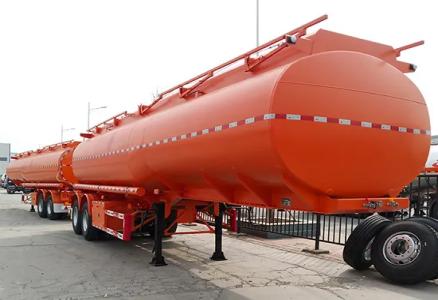
Many tanker drivers and loading personnel share a common misconception: filling a tank as much as possible reduces unused payload capacity and suppresses liquid movement during transit, making the vehicle more stable. However, from the perspective of hazardous chemical tanker trailer transport safety, excessive filling can introduce serious hazards and may even lead to severe accidents.
Liquids expand when heated and contract when cooled. As the temperature rises, the liquid inside a tank increases in volume. If a closed tank has no additional space to accommodate that expansion, overpressure leakage or even tank rupture can occur. The gas-filled space left between the liquid surface and the top of the tank after loading is known as vapour space, also called headspace or expansion space. It serves as the legally required buffer against this risk.
Vapour space is neither wasted tank capacity nor an accidental gap left by loading personnel. It is a safety buffer required by tank design and filling rules. During transport, it accommodates thermal expansion, vapour generated by volatile chemicals, and liquid level fluctuations caused by vehicle movement.
Different tanker types use different control approaches. Atmospheric liquid tankers rely on vapour space combined with pressure-vacuum vents to balance internal and external pressure. Pressure-vessel tankers carrying liquefied gases are subject to stricter filling-factor controls. Neither type may be completely filled with liquid, although their safety control methods differ.

Consider common petroleum products transported by road. Petrol has an approximate volumetric expansion coefficient of 0.0012/°C, while diesel has an approximate coefficient of 0.00085/°C. In simple terms, each litre of petrol increases in volume by approximately 0.12% for every 1 °C rise in temperature.
Suppose a fuel tanker with a capacity of 30 m³ is filled at 20 °C in the early morning. During the day, exposure to sunlight raises the cargo temperature to 50 °C, a temperature increase of 30 °C. The petrol volume would expand by approximately 3.6%, equivalent to 1.08 m³. Diesel would expand by approximately 2.55%, equivalent to 0.765 m³.
If the tank is already completely full, there is nowhere for the additional volume to go. The danger can develop in three stages:
Rapid pressure increase: The expanding liquid pushes upwards and compresses the small amount of gas remaining inside the tank, causing internal pressure to rise rapidly.
Leakage through the vent: A pressure-vacuum vent is designed to admit and release gas to balance pressure differences. If the liquid level reaches and submerges the valve disc, liquid cargo can contact the vent and escape.
Damage to the tank and seals: If pressure continues to exceed the limits of the tank and sealing components, vulnerable areas such as welds, tank heads, unloading outlets and manhole covers may fail first. The consequences can range from cargo seepage to permanent deformation or outright rupture.
When volatile liquefied gases are transported, the risk becomes more severe because internal pressure also rises with the cargo’s saturated vapour pressure. For liquefied propylene, for example, the vapour pressure is approximately 1.0 MPa at 20 °C, increases to 1.3 MPa at 30 °C, and reaches approximately 1.6 MPa at 40 °C. As temperature rises, pressure increases more rapidly, leaving less safety margin.

Accidents in China and overseas have demonstrated the severe consequences associated with overfilling.
On 11 July 1978, a liquefied propylene tanker with a capacity of 43 m³ exploded on a road in Spain. The blast affected a nearby campsite, resulting in 215 deaths and 67 injuries. According to accident records, local regulations required liquefied gas filling to remain below 85% of tank capacity, but the vehicle involved was filled almost completely. After loading in the morning, the tanker travelled in intense summer heat. Thermal expansion caused a tank weld to split, releasing propylene. The subsequent pressure drop triggered a vapour explosion.
A similar hazardous incident also occurred in China. According to an accident investigation report published by the Taizhou Emergency Management Bureau, a chlorine pressure-vessel tanker was exposed to prolonged high temperatures and direct sunlight. The saturated vapour pressure inside the tank exceeded the rated pressure of the rupture disc, causing the disc to burst and the safety valve to lift. Chlorine carrying residual material discharged through the relief outlet, creating a hazardous chemical release.
An accident report published by the Huizhou Daya Bay Development Zone also documented a leakage incident involving a faulty pressure-vacuum vent at the rear of a tanker. The liquid level inside the tank was excessively high. As the vehicle travelled over uneven roads, isooctane moved inside the tank and leaked through the failed vent.
Although these accidents resulted from multiple contributing factors rather than “a completely filled tank” alone, they shared a critical adverse condition: insufficient vapour space to act as a safety buffer, removing the tank’s first line of defence against overpressure and leakage.
Everyone working in tanker transport should remember a basic principle: safety means leaving sufficient room for physical changes, rather than filling the tank completely. Thermal expansion and contraction follow physical laws that do not change to accommodate lower transport costs or tighter delivery schedules.
As a specialist tanker manufacturer, HCSV follows applicable national standards in tank research, development and production. It provides compliant expansion space according to the physical and chemical properties of different cargoes and equips tanks with reliable safety relief components. The company holds the full manufacturing qualifications for both atmospheric tanks and pressure vessels.
Building high-quality tanker equipment and long-term brand value is not about carrying one additional tonne of cargo. It is about ensuring that every journey can withstand temperature changes, challenging road conditions and extended operating periods. By preserving adequate vapour space, we fill the tank with a commitment to safety rather than filling every available space with liquid.