English
 français
 Español
 русский
 português
 العربية
 Türkçe
 tiếng việt
 Burmese
Phone:
+8603175985777
 Hebei Changhua Star Vehicle Co.,Ltd.
WHAT ARE YOU LOOKING FOR?
Hebei Changhua Star Vehicle Co.,Ltd.
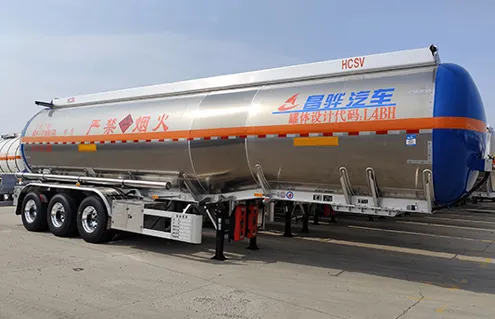
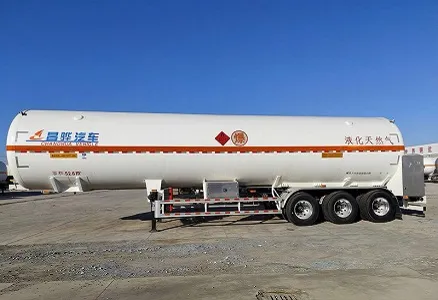
Hebei Changhua Special Vehicle Co., Ltd. (HCSV) has recently completed all factory inspections and dispatched another independently designed and manufactured aluminium alloy insulated tanker. For users seeking both lower weight and greater efficiency while maintaining cargo temperature and quality during long-distance liquid transport, the vehicle offers a new solution that combines lightweight construction with thermal insulation.

The main tank body of this aluminium tanker trailer is manufactured from corrosion-resistant 5083 aluminium alloy in the aluminium–magnesium series. With magnesium as its principal alloying element, 5083 is a non-heat-treatable alloy used in welded aluminium structures. It offers good formability, weldability and corrosion resistance. A dense, passive aluminium oxide film forms on its surface, helping it maintain resistance to uniform corrosion in humid conditions and chloride-containing coastal salt-spray environments. These properties make it a widely used material for tanker vehicles and tank containers.
Aluminium alloy has approximately one-third the density of steel, enabling a substantial reduction in tank weight compared with conventional carbon steel tanks. Under applicable truck weight limits, reducing tare weight creates scope for a legally higher payload. Lower running resistance also helps reduce fuel consumption in long-term trunk-route operations. HCSV uses a self-supporting tank structure without a main chassis beam: the tank itself carries the load, eliminating additional load-bearing subframe beams and further reducing tare weight. The aim is lightweight engineering rather than reduced material quality or specification. Strength remains a prerequisite. Tank plates are made from qualified aluminium materials meeting GB/T 38106—2019, Aluminium and Aluminium Alloy Plates and Sheets for Pressure Vessels. Plate materials and welded joints undergo procedure qualification and inspection in accordance with applicable requirements, grounding weight reduction in compliant materials and structural design.
Thermal insulation is another core capability of this insulated tanker trailer. The tank incorporates an insulating interlayer between the inner tank and outer shell. Depending on the cargo and operating conditions, materials such as polyurethane foam or glass fibre wool are selected, densely filled, protected against moisture and enclosed with external cladding. This forms a continuous insulating layer without thermal bridges, reducing cargo cooling or warming caused by external temperature differences during transit. Internal baffles can be fitted as required to suppress liquid surges on uneven roads and through bends. Exposed components, including unloading pipelines, valves and manholes, are also insulated to prevent local thermal bridges from reducing overall insulation performance.
The specific capacity, approved cargo and insulation duration of this unit are governed by its factory nameplate and technical agreement. For high-temperature cargoes such as bitumen and hot heavy fuel oil, HCSV can separately match suitable high-temperature-resistant alloy grades with thicker insulation.
Aluminium alloy insulated tankers fall within the category of transportable pressure vessels, with safety requirements exceeding those for ordinary enclosed freight vehicles. HCSV holds special equipment design and manufacturing licences, with capabilities covering Category III low- and medium-pressure vessels, vehicle-mounted tanks, road tankers and tank containers. It is among the relatively few companies in the industry holding both design and manufacturing qualifications. In 2023, the design and production of semi-trailers and pressure vessels within the company’s licensed scope passed ISO 9001 quality management system certification. The company also obtained environmental and occupational health and safety management system certifications, while its aluminium alloy tankers, carbon steel tankers and pressure-vessel tankers passed European-standard certification.
The complete vehicle follows the Safety Technical Supervision Regulation for Transportable Pressure Vessels (TSG R0005) and relevant national standards. Records are retained for raw material reinspection, welding procedure qualification, weld inspection, hydrostatic testing and safety accessory verification, creating a traceable quality assurance process. This also provides the compliance foundation for products entering the hot desert regions of the Middle East, the cold Gobi regions of Central Asia, coastal salt-spray environments and markets along the Belt and Road.

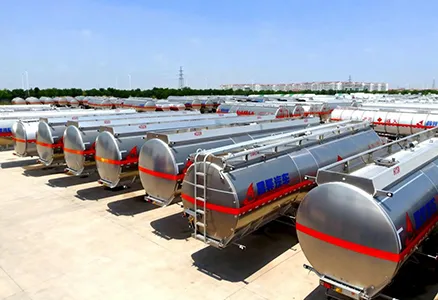
From its manufacturing base in Huanghua, Cangzhou, HCSV supplies tanker products across China and exports to multiple overseas markets. Aluminium alloy insulated tankers serve applications involving clean liquids requiring temperature control, temperature-sensitive chemical materials, oils and fats, and food-grade cargoes. In hot regions, insulation limits external heat ingress to prevent overheating and deterioration of the cargo. In cold regions, it slows heat loss to prevent highly viscous cargoes from cooling and solidifying. To accommodate road conditions, loading practices and certification requirements in different countries, HCSV offers custom tanker trailer solutions covering tank capacity, insulation level, piping layout, connection standards and safety accessory configurations.
If you are looking for an aluminium alloy insulated tanker that combines lightweight construction, thermal insulation and compliance qualifications, contact the HCSV team through the official website or service hotline for a configuration proposal and quotation tailored to your target market and cargo. HCSV applies rigorous manufacturing standards to deliver every tanker safely and on time.