English
 français
 Español
 русский
 português
 العربية
 Türkçe
 tiếng việt
 Burmese
Phone:
+8603175985777
 Hebei Changhua Star Vehicle Co.,Ltd.
WHAT ARE YOU LOOKING FOR?
Hebei Changhua Star Vehicle Co.,Ltd.
As the global specialized logistics industry becomes increasingly sophisticated, the selection of liquid tanker transportation equipment directly affects operational efficiency and cost control. For companies transporting fuel, chemicals, asphalt, liquefied gases, and other materials, choosing between single-compartment and multi-compartment tanker semi-trailers is more than a matter of structural differences. It is a strategic decision based on transportation conditions, cargo types, and distribution models.
Drawing on more than 30 years of specialized vehicle manufacturing experience, HCSV (Hebei Changhua Special Vehicle Co., Ltd.) provides an in-depth analysis of the different advantages of these two configurations in terms of technical specifications, operating conditions, and total lifecycle costs, helping customers worldwide select the most suitable tanker trailers for their needs.

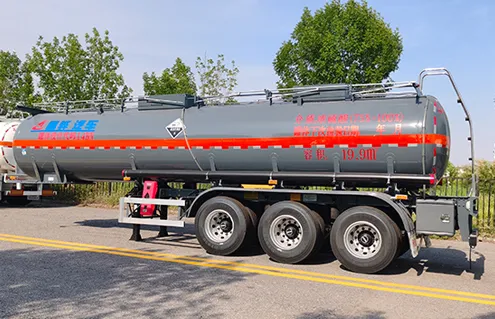
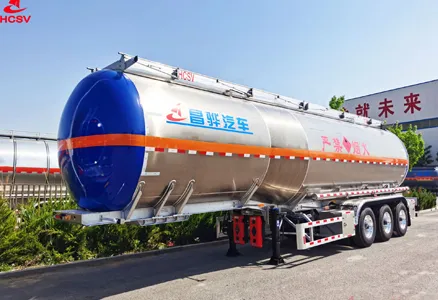
Single-compartment tanker semi-trailers feature an integrated tank structure without internal partitions. The entire tank consists of one independent compartment, equipped with a complete set of loading and unloading systems, safety accessories, and monitoring devices. This conventional design has been proven through years of market use and offers distinct advantages in specific transportation applications.
First, maximum tank capacity utilization. Without internal transverse partitions occupying space, the effective loading capacity is 3%–5% higher than that of a multi-compartment configuration with the same external dimensions. For bulk transportation businesses that charge based on cargo volume, this can significantly increase revenue per vehicle.
Second, a simple and reliable structure. The tank has fewer weld seams, and the number of sealing points is reduced by more than 40%, significantly lowering the risk of leakage. With a unified piping system and fewer wear-prone components, such as valves and pumps, routine maintenance is also more convenient.
Third, higher loading and unloading efficiency. A single high-flow loading and unloading port, combined with a large-diameter bottom valve and discharge pipeline, can reduce the time required to load or unload the entire tank by 20%–30%, significantly improving vehicle turnaround efficiency.
Fourth, easier cleaning and cargo changeover. The single-compartment structure has no internal partitioned areas that are difficult to access, allowing for faster cleaning and less residual cargo. This reduces tank cleaning costs when switching between different transported materials.
Single-compartment tanker semi-trailers are particularly suitable for medium- and long-distance transportation of a single product along fixed routes. Typical applications include bulk refined petroleum transportation from refineries to oil storage depots, single chemical raw material transportation from chemical industrial parks to terminal storage facilities, and insulated asphalt transportation.
In addition, for the transportation of pressurized hazardous materials such as LNG, LPG, and liquid carbon dioxide, single-compartment tank structures provide more uniform stress distribution, reduce the complexity of pressure vessel design and manufacturing, and offer a greater safety margin. This design is also used in specialized equipment such as an LNG trailer.
The single-compartment pressure vessel tankers manufactured by HCSV strictly comply with the GB 150-2011 Pressure Vessels standard and have obtained certifications including GCC and ISO 9001. These products have been exported in batches to countries along the Belt and Road Initiative, including markets in the Middle East, Central Asia, and Southeast Asia.
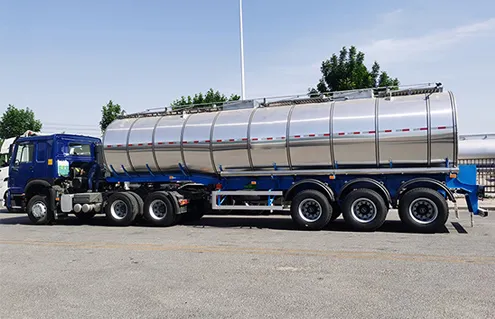
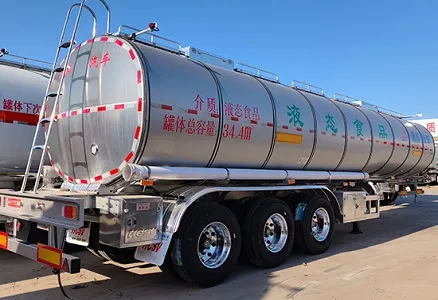
Multi-compartment tanker semi-trailers divide the tank into 2–6 independent compartments using high-strength internal anti-surge partitions. Each compartment is equipped with its own manhole, bottom valve, discharge outlet, liquid level monitoring system, and ventilation system. The compartments are completely sealed off from one another, allowing different materials to be transported simultaneously without cross-contamination.
First, transportation of multiple products in one vehicle. Different grades of fuel, such as gasoline, diesel, and kerosene, or various chemical raw materials, can be delivered during a single trip. This significantly reduces the number of delivery trips and lowers the vehicle's empty-running rate.
Second, improved distribution efficiency. The ability to make multiple deliveries with one vehicle allows operators to serve several gas stations or customer locations without repeatedly returning to the depot for loading. This significantly expands the distribution radius and service network coverage.
Third, better driving stability. The internal partitions also function as anti-surge baffles, effectively reducing the longitudinal movement of liquids during transportation. This helps lower the risk of rollover caused by shifts in the tank's center of gravity, making multi-compartment configurations particularly suitable for complex road conditions in mountainous and hilly areas.
Fourth, adjustable weight distribution. By optimizing the loading arrangement across different compartments, operators can improve axle load distribution and extend the service life of tires and braking systems.
Multi-compartment tanker semi-trailers are the preferred choice for refined petroleum distribution, urban fuel supply networks, and the delivery of different types of fuel to mining areas.
For example, a typical three-compartment fuel tank trailer can be divided into compartments in a 4:4:2 ratio to transport No. 92 gasoline, No. 0 diesel, and aviation kerosene simultaneously. A single trip can replenish three gas stations, increasing distribution efficiency by more than 50%.
HCSV can customize tanker trailers with 2–6 compartments in different capacity ratios according to customers' operating routes. All internal partitions are welded using fully automated laser welding technology and undergo hydrostatic pressure and airtightness testing to ensure zero leakage between compartments.

When choosing between single-compartment and multi-compartment tanker trailers, companies need to evaluate their specific business requirements. The following five factors should be considered.
First, the number of cargo types transported. If a company consistently transports a single material and does not frequently need to switch cargo types, a single-compartment configuration generally offers lower total lifecycle costs. However, if two or more different materials frequently need to be transported simultaneously, or if deliveries must be made to multiple customers with different requirements, a multi-compartment configuration provides greater overall benefits. It is particularly important to verify the compatibility of hazardous chemicals when transporting different materials in a multi-compartment chemical tanker trailer to avoid the risk of chemical reactions.
Second, distribution model and delivery network density. Single-compartment tanker trailers are generally preferred for point-to-point bulk transportation along major routes, while multi-compartment models are better suited to multi-stop delivery and terminal distribution. According to the data cited, when a vehicle serves three or more delivery locations per day, the unit distribution cost of a multi-compartment tanker trailer is more than 28% lower than that of a single-compartment model.
Third, road conditions and terrain. Single-compartment tanker trailers have clear advantages for long-distance highway transportation across relatively flat terrain. On rough and uneven roads in mountainous areas, mining regions, and rural locations, the anti-surge structure of multi-compartment tanker trailers can significantly improve driving safety and the fatigue life of the tank structure.
Fourth, initial investment and maintenance costs. For the same tank capacity, multi-compartment tanker trailers typically cost 10%–15% more to purchase. They also require more piping, valves, and other components, making maintenance more complex. Single-compartment models have lower initial purchase and maintenance costs, making them more suitable for small and medium-sized operators purchasing tanker trailers for the first time.
Fifth, regulations and market access requirements. Some countries and regions impose stricter regulatory requirements and certification procedures on multi-compartment transportation of hazardous chemicals. HCSV's full range of tanker trailer products complies with Chinese national standards, including GB 1589 and GB 7258. The company can also provide support for international certifications such as GCC, ECE, and ADR, helping customers meet the requirements of overseas markets.
There is no absolute advantage or disadvantage between single-compartment and multi-compartment tanker semi-trailers. The key difference lies in their suitability for different operating conditions. Single-compartment tanker trailers offer efficiency, cost-effectiveness, and reliability, making them a solid choice for long-distance bulk transportation. Multi-compartment tanker trailers provide flexibility, consolidated transportation, and versatility, making them valuable equipment for terminal distribution networks.
Companies should select the most suitable technical solution based on their business structure, stage of development, and market environment.
HCSV (Hebei Changhua Special Vehicle Co., Ltd.) remains committed to meeting customer needs. With extensive technical expertise and a comprehensive global service system, the company provides customers with full lifecycle services, from vehicle selection consultation and customized manufacturing to after-sales maintenance, helping logistics and transportation companies worldwide reduce costs, improve efficiency, and maintain safe operations.