In the global energy sector, the transportation of liquefied gases is a complex logistics operation that requires specialized equipment. These devices need to be customized according to the unique physical properties of the fuel being transported. Although liquefied petroleum gas (LPG) and liquefied natural gas (LNG) may sound somewhat similar, they are fundamentally different substances and require significantly different transportation technologies. For fleet operators and energy suppliers, understanding the differences between LPG tank trailer and LNG tank trailer is crucial for ensuring safety, improving efficiency, and complying with regulations.
Chemical Composition and Physical State
The main difference begins with the product itself. Liquefied petroleum gas is a mixture of hydrocarbon gases, with propane and butane being the main components. It can be easily liquefied at relatively low pressures (about 0.7 to 1.5 megapascals) and at normal temperatures. In contrast, liquefied natural gas is almost entirely composed of methane. Unlike liquefied petroleum gas, methane cannot be liquefied merely by pressure at room temperature. To convert natural gas into a liquid, it must be cooled to a low temperature, namely -162°C (-260°F). This cooling process reduces the gas volume by 600 times, making it suitable for long-distance transportation, but the heat management is much more complicated.
Pressure and Temperature
For liquefied petroleum gas transport vehicles, the primary engineering challenge they face is pressure control; while for liquefied natural gas transport vehicles, the issue is insulation and heat preservation.
Liquefied Petroleum Gas Transport Trailer: Pressure Vessel
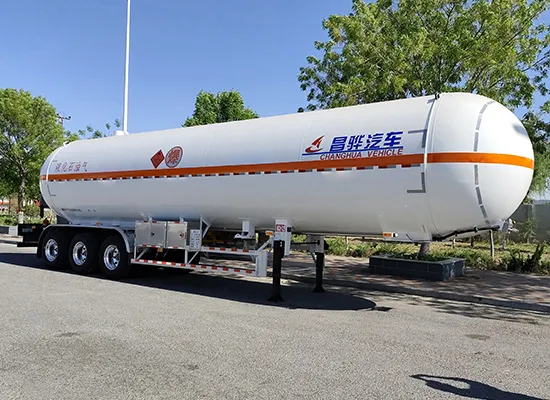
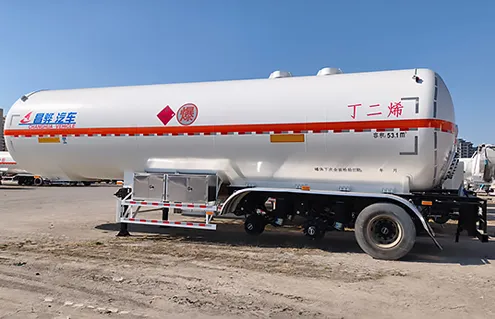
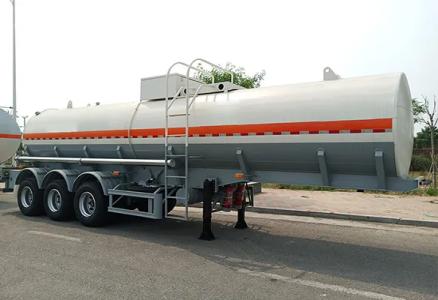
A liquefied petroleum gas trailer is essentially a high-pressure storage tank mounted on a chassis. Since liquefied petroleum gas remains in a liquid state at room temperature due to pressure, this storage tank is designed as a single-layer vessel. These tanks are typically made of high-strength carbon steel (such as Q345R) and have a thick wall thickness to withstand the vapor pressure inside the propane/butane mixture.
For companies seeking reliable solutions for the transportation of liquefied petroleum gas, the HCSV liquefied petroleum gas transport trailer is a prime example of such engineering design. These vehicles are manufactured from high-strength steel and undergo rigorous X-ray inspection and hydraulic pressure testing to ensure their ability to safely handle the fluctuating pressure variations caused by outdoor temperature changes.
LNG Transport Trailer: Cryogenic Container
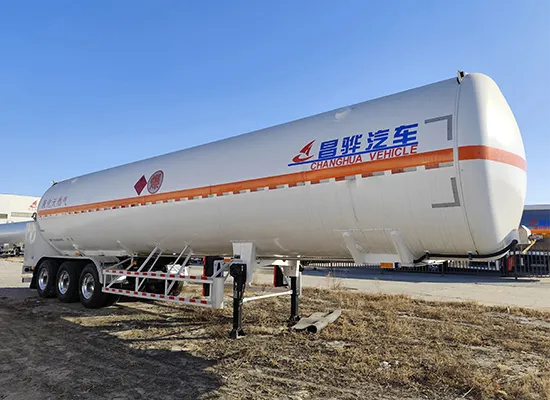
The working principle of an LNG trailer is completely different from that of traditional vehicles. Since liquid LNG must be maintained at a temperature of minus 162 degrees Celsius, this trailer is like a huge vacuum bottle. It adopts a double-layer structure design with an inner tank and an outer tank. The inner tank is made of stainless steel to maintain the integrity of the structure in the ultra-low temperature environment, while the outer tank is made of carbon steel. The space between the two layers of tanks is filled with insulation materials, and then vacuum treatment is carried out to form a high vacuum environment.
The HCSV LNG transport trailer employs advanced multi-layer wound vacuum insulation technology. This design is crucial because once the vacuum environment is disrupted, the LNG will start to warm up, convert back into gas, and cause an increase in internal pressure, resulting in product loss or safety hazards.
Material Selection and Durability
The materials used in construction depend on the temperature of the goods. The carbon steel used in standard liquefied petroleum gas transport vehicles becomes more brittle and prone to cracking in low-temperature environments. Therefore, this material will never be used in the main storage containers for liquefied natural gas.
Liquefied natural gas transport vehicles need to use high-grade stainless steel or aluminum alloys to manufacture the internal containers to ensure their low-temperature toughness. This material requirement is combined with a double-layer vacuum design, making liquefied natural gas transport vehicles more costly and technologically advanced than liquefied petroleum gas transport vehicles. However, the HCSV design reduces the weight burden of the double-layer structure by using high-strength, lightweight alloys, thus achieving a higher load-bearing capacity and weight ratio.
Safety System and Loading/Unloading Operations
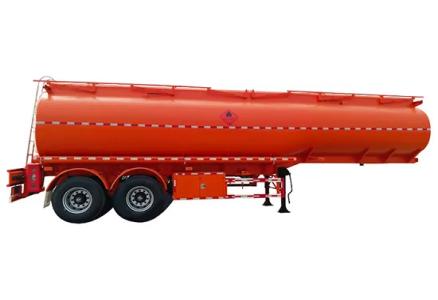
Liquefied petroleum gas tanker: These vehicles are equipped with pumps and compressors to handle the liquid/gas state of propane. Safety features focus on pressure release valves and emergency shut-off valves when handling flammable gases at normal temperatures.
Liquefied natural gas tanker: These vehicles need to be equipped with specialized low-temperature valves and hoses to ensure they do not freeze or rupture when in contact with liquid natural gas. They usually have an "evaporative gas" management system. During unloading at the terminal, liquefied natural gas tankers use pressure boost coils to evaporate a small amount of liquefied natural gas to increase the pressure inside the tank and discharge the liquid.
 Hebei Changhua Star Vehicle Co.,Ltd.