In the fields of heavy logistics and liquid transportation, tanker trucks are indispensable and crucial equipment. Whether transporting petroleum, flammable chemicals, food-grade liquids, or dry bulk materials, the efficiency and legality of their operations depend on a key factor: the size of the tanker trucks. Understanding the physical specifications of these tanker trucks is not merely out of technical curiosity; it is crucial for complying with regulations, planning routes, and maximizing the cargo capacity.
Why is the Size of an Oil Tanker Important?
Before delving into specific data, it is necessary to understand the reasons why size is so crucial in the design of oil tankers.
Legal compliance: Each country has strict regulations regarding the maximum length, width, and height of vehicles on public roads. Exceeding these limits may result in hefty fines or safety hazards.
Capacity optimization: The size of the vehicle is directly related to the volume of the cargo. However, due to the different densities of different liquids, a larger truck does not always mean it can carry more weight.
Infrastructure compatibility: The trailer must be able to smoothly pass over bridges, enter loading and unloading areas, and pass through narrow bends in urban or industrial environments.
Stability: The height and width of the trailer affect its center of gravity. Carefully designed dimensions can prevent rollover accidents, especially when transporting liquids that are prone to shaking.
Overview of the Dimensions of Standard Tanker Trailers
Although there are customized designs, most tanker trailers follow a series of industry standards. Based on the common configurations in the North American and international markets, the following are typical size ranges:
Length
The standard length of tanker trailers is usually between 42 feet and 53 feet (i.e. 12.8 meters to 16.1 meters).
Width
The standard width of most tanker truck trailers is 8.5 feet (102 inches or 2.6 meters). This is the legal maximum width of most roads and vehicles can pass without needing to apply for an oversized transportation permit.
Height
Height is a crucial factor that must be considered when passing over the overpass. The body height of most oil tankers ranges from 11 feet to 13.5 feet (approximately 3.35 meters to 4.11 meters). The exact height usually depends on the type of oil unloading system, as well as factors such as whether there is a top walkway or steam recovery pipeline.
Ground Clearance
Typically, the distance between the bottom of the fuel tank or the landing gear and the road surface is approximately 12 to 18 inches.
The Sizes of Different Types of Oil Tanks
Different goods require different shapes and sizes of oil tanks. The size usually depends on the specific gravity of the liquid and the materials used for the oil tanks.
Fuel Transport Vehicle Trailer
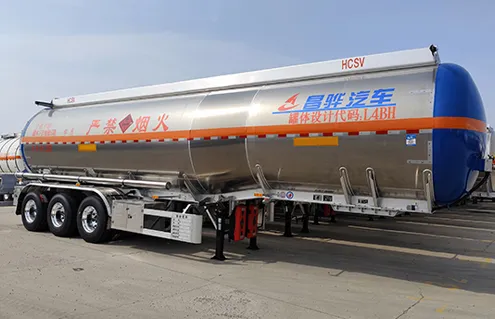
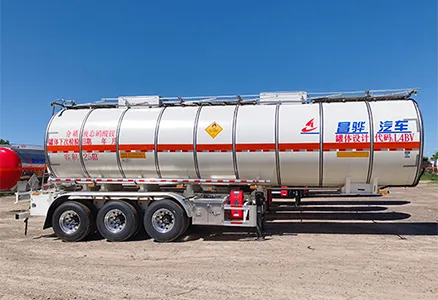
Fuel transport vehicles are usually made of aluminum to reduce their weight. Their length is generally between 42 and 48 feet. Since gasoline is relatively lightweight, these trailers have a large capacity, ranging from 8,000 gallons to 11,000 gallons, in order to maximize the loading capacity within the weight limit.
Chemical and Acidic Substance Transport Vessels
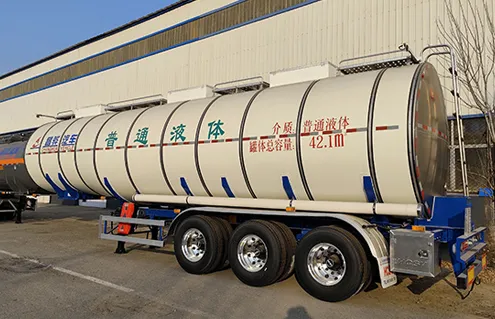
Chemical transport vessels are usually shorter, typically around 42 feet in length, and are made of stainless steel. Since the density of many chemicals is much higher than that of fuel, their storage tanks are relatively small to prevent the vessels from exceeding the gross vehicle weight limit (GVWR) when fully loaded.
Dry Bulk (Pneumatic) Transport Vehicles
These vehicles are used for transporting goods such as cement, flour, or plastic pellets. They are characterized by a funnel design. They are usually quite tall, reaching a maximum height of 13.5 feet, and unload by relying on gravity and air pressure. Their length is typically between 48 and 53 feet.
Liquefied Gas and Liquefied Natural Gas Carriers
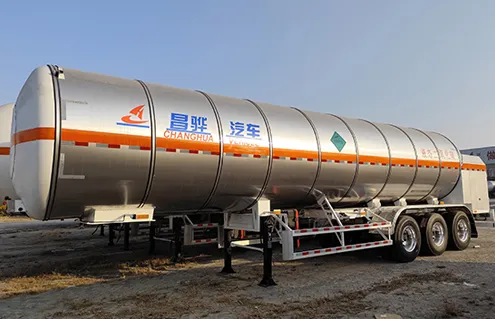
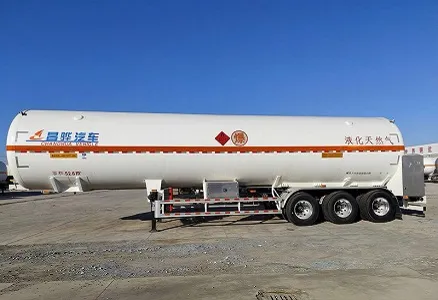
Liquefied gas carriers are pressure vessels. Their characteristic is a cylindrical shape with rounded ends. Their dimensions are usually relatively compact in length, but the cylinder body is thicker, which increases the outer diameter while maintaining the standard width limit.
Product Advantages of HCSV
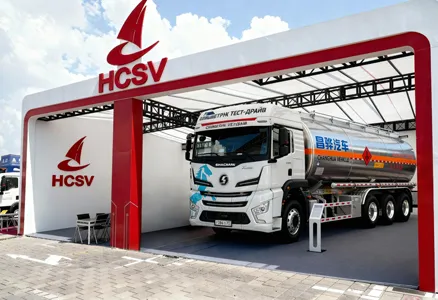
When choosing a trailer, the ability of the manufacturer to strike a balance between size and structural strength is of utmost importance. HCSV has established its position as a top manufacturing enterprise by focusing on optimizing the design of tanker trailer trucks.
According to the specifications of HCSV's tanker trailer types, these products are designed to comply with various international standards. By using high-strength materials such as carbon steel, stainless steel, or aluminum alloy, HCSV ensures that the size of the trailer can provide the maximum internal volume without compromising safety or adding unnecessary weight.
Low center of gravity design: By optimizing the ratio of height to width, HCSV's trailers can offer excellent driving stability.
Customization: Whether the customer requires a capacity of 30,000 liters or 50,000 liters, HCSV's products will adjust the length and parameter settings of the tank based on the specific front-end configuration.
Factors Affecting the Size of Oil Tanker Trucks
Axle configuration
The number of axles (2 axles, 3 axles or even 4 axles) determines the weight that an oil tanker trailer can legally carry within the length range of the trailer. Bridge regulations in many regions require a minimum spacing between axles to distribute the weight, which usually necessitates longer oil tanker trucks.
 Hebei Changhua Star Vehicle Co.,Ltd.