Choose tanker material according to the cargo first, then compare payload, acquisition cost, maintenance requirements, and expected operating life. In practical fleet purchasing, stainless steel is usually preferred for corrosive, hygienic, and high-purity liquids; aluminum is attractive for fuel and other applications where low tare weight and payload efficiency are priorities; carbon steel is often the economical choice for compatible petroleum products, water, asphalt, and industrial liquids where corrosion can be controlled.
The wrong material can create corrosion problems, reduce payload, increase maintenance costs, or restrict the liquids the tanker can carry. Buyers should therefore evaluate the complete operating cycle rather than comparing purchase prices alone.
Key Differences Between the Three Materials
The following table provides a practical purchasing comparison. Actual trailer weight, price, and service life vary with tank volume, shell thickness, material grade, compartments, axles, welding design, cargo, and maintenance program. HCSV, for example, offers stainless grades including S30408, S304L and S316L, aluminum alloys including 5182 and 5454, and several carbon-steel grades depending on the tanker specification.
| Factor | Stainless Steel | Aluminum | Carbon Steel |
|---|
| Tare Weight | Medium; depends strongly on grade and tank design | Lowest of the three in comparable applications | Generally higher than aluminum |
| Effective Payload | Good | Excellent where road weight is the limiting factor | Good, but higher tare can reduce available payload |
| Corrosion Resistance | Excellent when the correct grade is matched to the cargo | Very good for many fuels and compatible liquids, but not universal | Lowest without coatings, linings or corrosion protection |
| Purchase Cost | Usually highest | Medium to high | Usually lowest |
| Maintenance | Relatively low corrosion maintenance; cleaning and surface condition remain important | Low rust-related maintenance, but inspect welds and corrosion-sensitive areas | Requires closer inspection for rust, coating damage and internal corrosion |
| Typical Media | Food liquids, chemicals, pharmaceuticals, water, selected petroleum products | Gasoline, diesel, edible oils and compatible light liquids | Fuel, crude oil, water, asphalt and compatible industrial liquids |
| Service-Life Tendency | Long to very long when correctly specified | Long when cargo and operating environment are compatible | Highly dependent on coating, corrosion exposure and maintenance |
Aluminum has a particularly strong weight advantage: the Aluminum Association notes that aluminum structures can weigh substantially less than comparable steel structures because of the material's high strength-to-weight ratio. Stainless steel, meanwhile, obtains its corrosion resistance from a chromium-rich passive surface film.
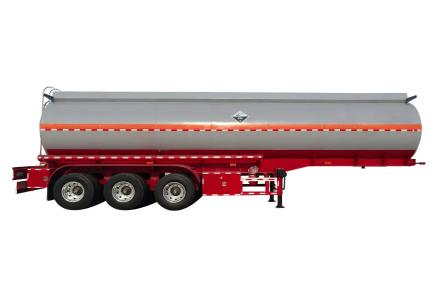
Corrosion Resistance and Cargo Compatibility
Cargo compatibility should be the first filter when selecting a tanker.
When Should You Choose Stainless Steel?
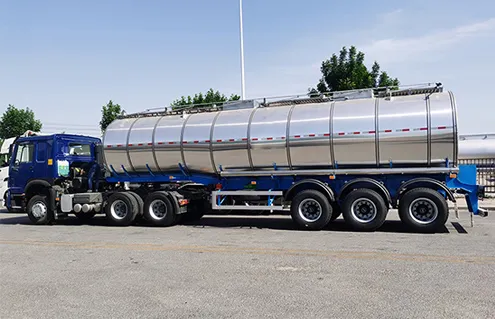
A Stainless Steel Tanker Trailer is often the strongest choice when product purity, hygienic cleaning, or resistance to corrosive media is more important than minimizing initial purchase cost.
Stainless steel contains chromium that forms a naturally protective passive film, giving the material substantially better corrosion resistance than ordinary carbon steel. Different stainless grades, however, have different resistance to chlorides, acids and other aggressive media. Stainless steel should therefore never be treated as universally resistant to every chemical.
Typical applications include:
Milk, edible oil and other food-grade liquids
Pharmaceutical liquids
Drinking water
Selected acids and chemical solutions
High-purity industrial liquids
Petroleum products where corrosion resistance or product cleanliness is important
For chemical transport, provide the manufacturer with the exact chemical name, concentration, temperature and density. The correct stainless grade should be selected against that information rather than simply ordering “stainless steel.”
When Is Aluminum a Better Choice?
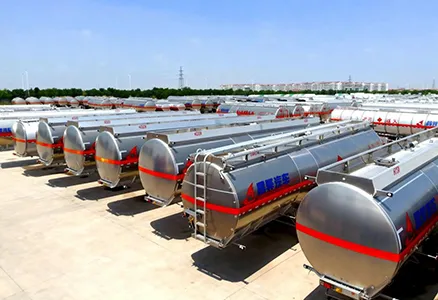
An Aluminium Tanker Trailer is especially attractive for fuel distribution because reducing tanker tare weight can increase the payload available under a fixed legal gross vehicle weight.
HCSV lists aluminum tanker configurations for petroleum, flammable liquids, food products and other compatible media, using alloys such as 5182 and 5454.
Aluminum also resists atmospheric corrosion well, but buyers should not interpret “corrosion resistant” as “compatible with every chemical.” Certain acids, alkaline products, chlorides or incompatible cleaning chemicals can attack aluminum.
For chemical applications, compatibility must be verified product by product.
Where Does Carbon Steel Make Sense?
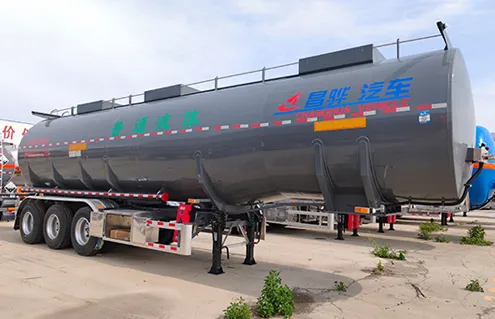
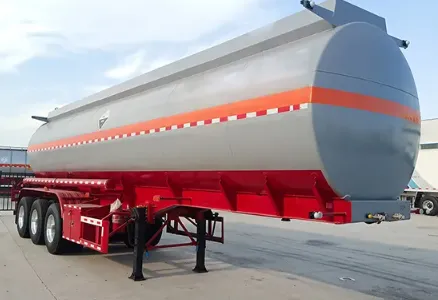
A Carbon Steel Tanker Trailer remains highly competitive where the transported medium is compatible and purchasing cost is a major consideration.
HCSV carbon-steel tankers are available for applications including fuel, chemicals, water and asphalt, with optional multi-compartment and insulated configurations.
Carbon steel is especially practical for:
Its main disadvantage is corrosion. Protective coatings, paint systems, linings and regular inspection can therefore have a major effect on long-term operating cost.
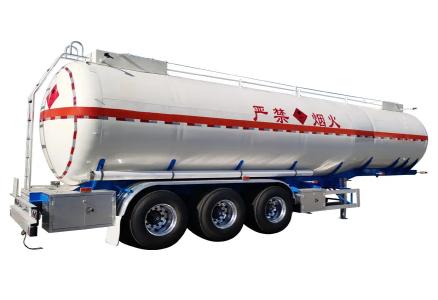
Tank Weight, Payload and Fuel Efficiency
For tanker fleets operating near legal road-weight limits, tare weight directly affects revenue-producing payload.
Consider two trailers of similar capacity. If one tanker weighs 1,500 kg less, that difference may potentially be converted into additional cargo payload—provided axle limits, gross vehicle weight regulations, tank filling limits and cargo density also allow it.
This is where aluminum becomes commercially attractive. HCSV specifically identifies lightweight construction and increased payload capacity as advantages of its aluminum tanker range.
A lighter trailer can offer two different benefits:
Maximum-load operation: more of the legal gross weight can be allocated to cargo.
Partial-load operation: the vehicle operates at a lower total weight, which can reduce the energy required for transportation depending on the route and duty cycle.
Stainless steel and carbon steel are heavier materials, but tanker weight should never be judged from material density alone. Tank thickness, chassis construction, reinforcement, compartment quantity, axles and accessories all affect final tare weight.
Buyers should request the actual estimated trailer tare weight and legal payload calculation, not simply ask which metal is lighter.
Purchase Price, Maintenance and Service Life
Carbon steel normally offers the lowest initial purchase cost, while stainless steel generally requires the highest initial investment. Aluminum typically falls between the two or may approach stainless pricing depending on alloy prices and fabrication requirements.
Purchase price, however, does not equal lifecycle cost.
A lower-priced carbon tanker may require additional corrosion protection, repainting, lining maintenance or repairs during its operating life. Stainless steel's passive corrosion-resistant surface and aluminum's inherent corrosion resistance can reduce some of these requirements when used with compatible cargoes.
Service life cannot responsibly be reduced to a fixed number of years. It depends on:
For a fleet expected to operate intensively for many years, calculate cost per year or cost per transported tonne, rather than selecting the tanker with the lowest factory price.
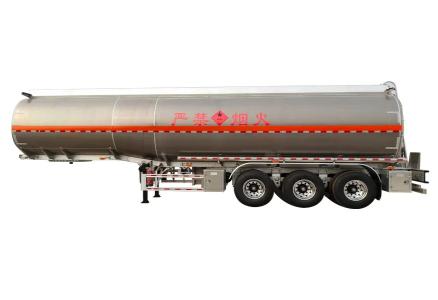
Which Material Fits Your Application?
A useful purchasing decision can be made by starting with the liquid being transported.
Gasoline and Diesel
Choose aluminum when: maximizing payload and minimizing tare weight are priorities.
Choose carbon steel when: lower acquisition cost and rugged construction are more important, and local payload economics make the additional weight acceptable.
Consider stainless steel when: special corrosion, cleanliness or multi-product requirements justify the additional investment.
Food-Grade Liquids
Stainless steel is generally the preferred starting point for milk, juice, edible oils and other products requiring hygienic cleaning and high product purity. Stainless surfaces are widely used in food-contact applications because of their corrosion resistance and cleanability.
Aluminum may be suitable for selected edible oils and compatible food liquids, but compatibility and cleaning requirements should be confirmed.
Water
For potable or hygienic water transport, stainless steel is often favored where cleanliness and corrosion resistance justify the investment.
For construction water, dust suppression or other non-potable applications, carbon steel can provide a more economical solution when appropriate internal protection is used.
Chemicals
Chemical tanker selection should never be made by a simple rule such as “all chemicals require stainless steel.”
Depending on the exact product, the correct solution may be:
Chemical concentration and temperature can change material compatibility significantly. Stainless steels themselves can also suffer pitting, crevice corrosion or stress-corrosion cracking under certain conditions.
Asphalt and Heavy Industrial Liquids
Carbon steel is commonly practical for asphalt tanker construction because it combines robust construction with compatibility with insulated and heated tank designs. HCSV's carbon-steel range includes dedicated liquid asphalt tankers and insulation options.
A Simple Buyer Decision Rule
When requesting a tanker quotation, work through the decision in this order:
Cargo compatibility → legal payload → cleaning requirements → corrosion exposure → service life → purchase price.
Send the manufacturer the cargo name, density, concentration, temperature, desired tank volume, destination country, axle limits, required compartments and loading/unloading method. This allows the tank material to be selected around the real operating requirement rather than price alone.
FAQs About Tanker Trailer Materials
Which tanker trailer material is best for fuel?
For gasoline and diesel distribution, aluminum and carbon steel are both widely practical choices. Aluminum is particularly attractive when maximizing payload is important because of its low tare-weight potential. Carbon steel is attractive where initial cost and rugged construction are higher priorities.
Is aluminum better than stainless steel for a tanker trailer?
Not universally. Aluminum is lighter, making it attractive for payload-sensitive transport. Stainless steel provides broader corrosion-resistant and hygienic options for many chemicals, food liquids and high-purity cargoes. The better choice depends primarily on the medium being transported.
Do aluminum tanker trailers rust?
Aluminum does not develop iron rust like carbon steel, but it can still corrode under unsuitable chemical, galvanic or environmental conditions. Cargo compatibility remains essential even with an aluminum tanker.
Is stainless steel suitable for every chemical?
No. Stainless steel offers excellent corrosion resistance, but different grades behave differently in acids, chlorides and other aggressive environments. Even stainless steel can experience pitting, crevice corrosion and stress-corrosion cracking.
Can a carbon steel tanker carry chemicals?
Yes, for chemicals compatible with the selected steel or when a properly engineered lining is used. HCSV's carbon-steel range includes chemical and plastic-lined tanker configurations, but the chemical name, concentration and operating temperature should be confirmed before production.
Which tanker trailer material lasts the longest?
There is no universal answer. A correctly specified stainless or aluminum tanker can provide excellent long-term corrosion performance, while a well-maintained carbon-steel tanker can also provide a long operating life in compatible service. Cargo chemistry, cleaning practices, coatings, inspection and operating environment matter more than the material name alone.
For buyers comparing a Stainless Steel Tanker Trailer, Aluminium Tanker Trailer and Carbon Steel Tanker Trailer, the most economical option is the one that safely carries the required liquid at the highest practical legal payload with acceptable maintenance throughout its service life. Selecting the material from the cargo backward—not from the purchase price forward—is usually the better tanker investment.
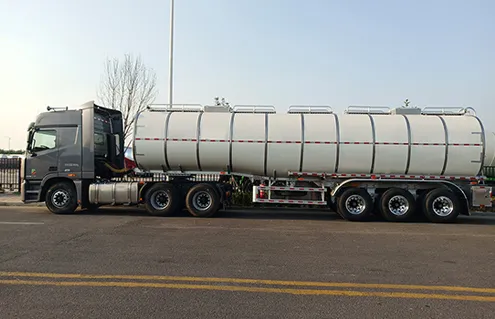
 Hebei Changhua Star Vehicle Co.,Ltd.