A 10000 gallon tanker trailer provides approximately 37,854 liters, or 37.85 m³, of nominal tank capacity when “gallon” refers to the U.S. liquid gallon. NIST conversion references use approximately 3.78541 liters per U.S. gallon.
For fuel transport, however, nominal volume is only one part of the specification. The actual amount of gasoline or diesel that can be carried depends on fuel density, trailer tare weight, axle loading, permitted gross vehicle weight, compartment configuration, and the regulations of the destination market.
A well-specified 10,000-gallon gasoline fuel trailer should therefore be selected around legal payload and operating conditions, not tank volume alone.
How Much Fuel Can a 10000 Gallon Tanker Trailer Carry?
The basic volume conversion is:
| Capacity Unit | Approximate Volume |
|---|
| U.S. gallons | 10,000 gal |
| Liters | 37,854 L |
| Cubic meters | 37.85 m³ |
This is the tank's nominal volumetric capacity. It does not automatically mean that 37,854 liters of gasoline or diesel can be legally loaded.
Fuel weight can be estimated with:
Cargo weight = liquid volume × fuel density
Gasoline is generally lighter than diesel, meaning the same 10,000-gallon tank produces different cargo weights depending on the product carried. Trailer tare weight, tractor weight, fuel, driver, accessories and other equipment must then be added to determine the complete vehicle weight.
This distinction becomes especially important in markets with relatively strict highway weight limits. In the United States, for example, Federal Interstate limits are generally 80,000 lb gross vehicle weight, 20,000 lb on a single axle and 34,000 lb on a tandem axle group, with the Federal Bridge Formula also considering axle number and spacing.
As a result, a 10,000-gallon tank may provide useful reserve volume without always being filled to its geometric maximum.
HCSV similarly positions 10,000-gallon-and-above tanker trailers as large-capacity configurations for applications where bulk transport efficiency is important.
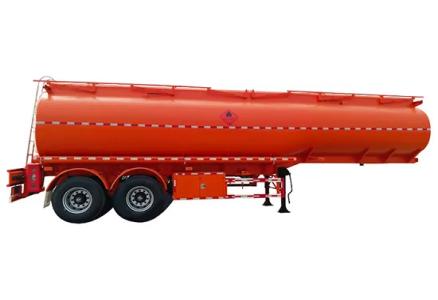
Typical Fuel Transport Applications
A 10000 gallon tanker trailer is most suitable where operators need relatively high trip volume and efficient bulk fuel movement.
Typical applications include:
Fuel terminal-to-distribution depot transport
Gasoline and diesel delivery to service-station networks
Mining and quarry fuel supply
Large construction-project fuel distribution
Industrial plant fuel supply
Agricultural and fleet fueling operations
Regional and long-distance petroleum transport
The operating cycle should influence the trailer design.
A trailer used primarily for terminal-to-terminal bulk transport may prioritize maximum payload and larger compartments. A tanker making multiple retail-station deliveries usually benefits more from several compartments, allowing different fuel grades or customer quantities to remain separated.
For this reason, buyers should define the delivery route before determining the internal tank layout.
Tank Material, Compartments and Fuel Compatibility
Carbon Steel Tank Body
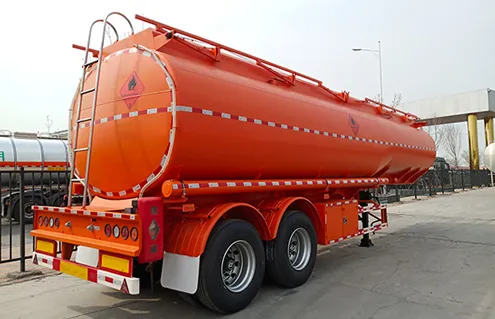
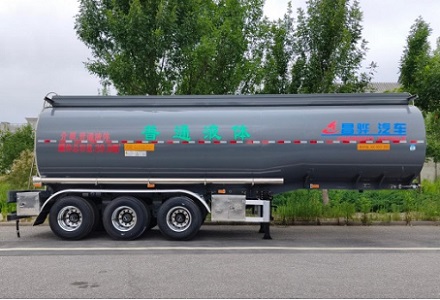
Carbon steel remains an important option for fuel tank trailers, particularly in markets where durability, repairability and acquisition cost are major purchasing considerations. HCSV offers carbon-steel tanker configurations for fuel and chemical transportation in addition to stainless-steel and aluminum designs.
For a 10,000-gallon carbon-steel tanker, buyers should evaluate:
Tank shell thickness
Internal and external corrosion protection
Welding quality
Tank pressure and leakage testing
Fuel compatibility
Trailer tare weight
Local tanker certification requirements
Carbon steel is heavier than aluminum, so the additional tare weight must be considered when calculating legal payload.
How Many Compartments Should a Fuel Tanker Have?
A gasoline fuel trailer can be built with one large compartment or multiple separated compartments.
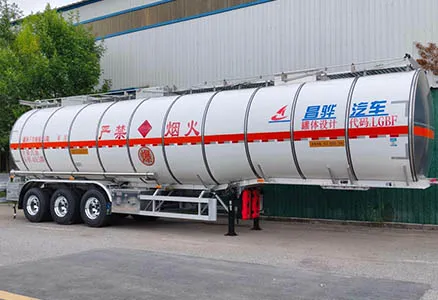
Common configurations may include 2, 3, 4, 5 or more compartments, depending on the required delivery pattern.
Multi-compartment tanks provide several advantages:
Carry gasoline and diesel separately
Transport different fuel grades in one trip
Deliver different quantities to several stations
Reduce product mixing
Improve route flexibility
Each compartment normally requires its own internal separation, outlet arrangement and valve control. Adding compartments therefore increases manufacturing complexity and cost, but it can substantially improve distribution efficiency.
API Valves and Bottom Loading
For fuel-distribution operations using bottom loading, buyers should confirm compatibility between the trailer equipment and the loading terminal.
API-style loading adapters are widely associated with petroleum tanker bottom-loading systems. Industry guidance on petroleum tank trucks describes emergency valves at individual compartments connected through piping to API bottom-loading valves, while API RP 1004 addresses bottom-loading and vapor-recovery system practices.
A quotation should clearly define:
API adapter quantity and size
Bottom valve specification
Discharge manifold layout
Vapor recovery requirements
Loading and unloading connection standards
Axle Configuration and Road Weight Requirements
Large tanker capacity makes axle selection particularly important.
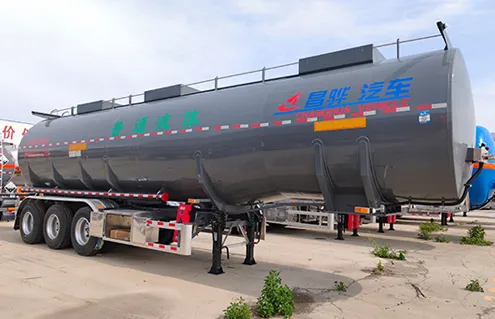
A 10,000-gallon trailer may be engineered with different axle configurations according to the destination country, payload target and road regulations. Three-axle designs are common in many tanker applications, while additional axles may be used where regional weight rules favor greater axle-load distribution.
The correct question is not simply:
“How many axles does a 10,000-gallon tanker need?”
It is:
“How should the required payload be distributed legally across the tractor and trailer axles?”
The manufacturer should calculate:
Trailer tare weight
Tractor curb weight
Expected fuel payload
Kingpin load
Trailer axle-group load
Tractor drive-axle load
Maximum gross combination weight
Axle spacing may also matter. Under U.S. Interstate rules, for example, the Federal Bridge Formula can limit allowable weight based on the number and spacing of axles even if individual axle ratings have not been exceeded.
For export buyers, HCSV should therefore be given the destination country and intended tractor specification before production, rather than selecting axles solely from a standard catalog configuration.
Safety Systems Buyers Should Check
Fuel transportation involves flammable liquids, so safety equipment should be reviewed as part of the purchasing specification rather than treated as optional accessories.
Emergency Shut-Off Valves
Emergency bottom valves or shut-off systems are designed to stop product flow when necessary. U.S. cargo-tank regulations include requirements for self-closing systems and remotely actuated closure in applicable configurations.
Buyers should confirm the number, actuation method and compatibility of emergency valves with every tank compartment.
Overfill Protection
Overfill sensors help prevent excessive loading during terminal operations. The overfill system should be compatible with the loading rack and the standards used in the destination market.
HCSV lists anti-overfill systems among the safety features available for its tanker trailers.
Grounding and Anti-Static Protection
Fuel transfer can create electrostatic charge. Proper grounding or bonding provisions are therefore essential during loading and unloading.
The tanker specification should include an appropriate grounding connection and should be matched to the terminal's loading procedures and applicable safety requirements.
Pressure and Venting Devices
Tank venting and pressure-relief equipment must suit the tank design and regulatory specification. U.S. DOT 406 requirements, for example, contain specific design requirements for cargo tank construction and pressure systems.
Certification and Inspection
Certification requirements vary by market.
For U.S.-specification cargo tanks, DOT 406 construction is governed by 49 CFR requirements, and continuing qualification includes prescribed testing and inspection requirements.
Other destinations may require ADR-related, national dangerous-goods or market-specific approvals.
Buyers should identify the required certification before the tanker is engineered, because standards can affect tank structure, valves, electrical systems, braking equipment, markings and documentation.
10000 Gallon Fuel Tanker Procurement Checklist
Before requesting a final quotation, confirm:
Providing these details at the quotation stage helps the manufacturer recommend a configuration based on real operating conditions rather than simply quoting a 10,000-gallon tank.
FAQs About 10000 Gallon Tanker Trailers
How many liters is a 10000 gallon tanker trailer?
A 10,000-U.S.-gallon tanker equals approximately 37,854 liters or 37.85 cubic meters.
Can a 10000 gallon tanker be filled completely with gasoline?
Not necessarily. Physical tank capacity and legal loading capacity are different. Actual loading depends on gasoline density, permitted filling level, trailer and tractor tare weight, axle distribution and local gross vehicle weight regulations.
How many compartments can a 10000 gallon fuel tanker have?
It can be manufactured with a single compartment or several compartments depending on the delivery operation. Multi-compartment construction is particularly useful when transporting different gasoline grades and diesel in one route.
What is an API valve on a fuel tanker?
In tanker-industry terminology, an API adapter or API valve is commonly associated with standardized bottom-loading connections used to transfer petroleum products between a loading rack and tanker. API RP 1004 addresses bottom loading and vapor recovery for petroleum tank vehicles.
Is carbon steel suitable for a gasoline fuel trailer?
Yes, where the material is compatible with the intended fuel and the trailer is engineered, protected and certified for the destination market. HCSV manufactures carbon-steel tanker options specifically for fuel and chemical transport applications.
What should I tell the manufacturer before ordering?
At minimum, provide the fuel type, required payload, destination country, applicable standard, tractor configuration, number of axles, compartment layout, tank material and loading/unloading system.
A 10000 gallon tanker trailer should ultimately be engineered as a complete fuel-transport system rather than selected only by gallon capacity. Matching the 37,854-liter tank to the correct carbon-steel specification, compartments, API loading equipment, emergency shutoff system, overfill protection, grounding provisions and legal axle loads gives operators a safer and more commercially practical gasoline fuel trailer for real-world distribution.
 Hebei Changhua Star Vehicle Co.,Ltd.