In recent years, continued development of the mining sector and energy infrastructure across Africa has steadily increased demand for the transportation of crude oil and industrial fuels.
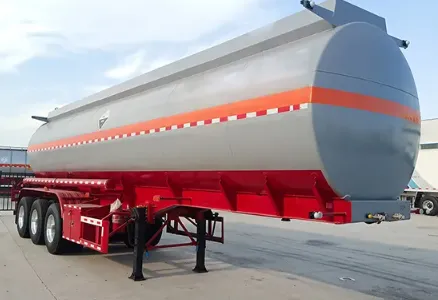
As essential equipment within the energy logistics chain, the performance of a heavy-duty oil tanker trailer can directly affect the operational efficiency and safety of mining areas, oilfields and energy projects. Many African projects are located in remote regions with difficult road conditions and challenging climates, where conventional tanker vehicles may struggle to meet the demands of continuous heavy-duty operation.
Heavy-duty tanker vehicles designed for African operating conditions therefore place greater emphasis on structural reinforcement, environmental adaptability and reliability. These characteristics are making them an increasingly important transportation solution for mining and energy projects.
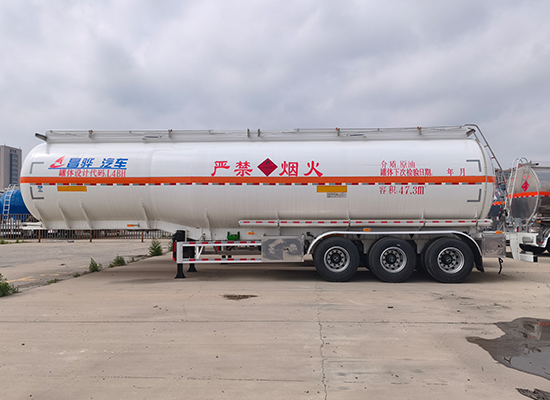
Transportation Challenges for African Mining and Energy Projects
Mining and energy projects across Africa are often located in remote areas far from major cities. Their transportation environments present a distinctive combination of challenges that place greater demands on crude oil tanker trailer.
Rough and Unpaved Roads
Transport routes around mines and oilfields frequently consist of unpaved surfaces, including laterite roads, gravel tracks and temporary mining roads.
Poor road surfaces and sharp stones continuously expose the chassis, suspension and tires to impact during long-term operation.
During the rainy season, red clay soil can soften when saturated with water, creating deep ruts and muddy sections that significantly reduce vehicle traction. During the dry season, heavy dust can enter mechanical components, seals and operating mechanisms, accelerating component wear.
Some mining areas in Southern and Eastern Africa also include extended slopes. Vehicles operating under heavy loads must frequently climb and brake on these routes, placing greater demands on the powertrain and braking systems.
High Temperatures, Humidity and Corrosive Conditions
Much of Africa experiences high temperatures throughout the year, while extreme ambient temperatures in some areas can exceed 50°C.
Such conditions place additional demands on vehicle cooling systems, sealing materials and the temperature stability of the tank.
Some coastal and rainforest regions also experience high humidity and salt-laden air. These conditions can accelerate corrosion of the tank body and chassis components, potentially shortening equipment service life.
Limited Maintenance Resources in Remote Areas
Professional repair facilities and qualified spare-parts supplies are often limited in remote project areas.
When a vehicle develops a complex fault, technical personnel and replacement parts may need to be transported over long distances, resulting in high downtime costs.
For this reason, project operators often place durability and ease of maintenance ahead of lightweight construction and fuel economy when selecting vehicles. Heavy-duty configurations with relatively simple structures and low failure rates are generally prioritized for long-term operation in these environments.
How Heavy-Duty Oil Tanker Trailers Are Adapted for African Conditions
To address the demanding operating conditions found in African mining and energy projects, heavy-duty crude oil tanker vehicles can be specifically optimized in areas ranging from the chassis and suspension to tank construction and environmental protection.
The main design considerations can be divided into three areas.
Reinforced Chassis and Suspension for Heavy-Duty Transport
The chassis uses a thickened high-strength main beam, with additional reinforcement applied to critical load-bearing areas.
This improves torsional resistance and impact strength, allowing the vehicle to better withstand continuous vibration and shock when operating on unpaved roads.
A multi-leaf spring suspension is commonly used for heavy-duty applications. Compared with lightweight suspension configurations using fewer leaves, this design provides greater load-bearing capacity and stronger resistance to impact, helping reduce the risk of suspension failure during prolonged heavy-load operation over rough surfaces.
The axle and braking systems can also be upgraded for heavy-duty use. High-capacity axles can be combined with drum brakes and wear-resistant brake linings to accommodate long downhill sections and frequent braking.
Some off-road tanker vehicles also use multi-drive chassis configurations to improve mobility on muddy and soft surfaces, making them suitable for oilfield sites and other operating areas without established roads.
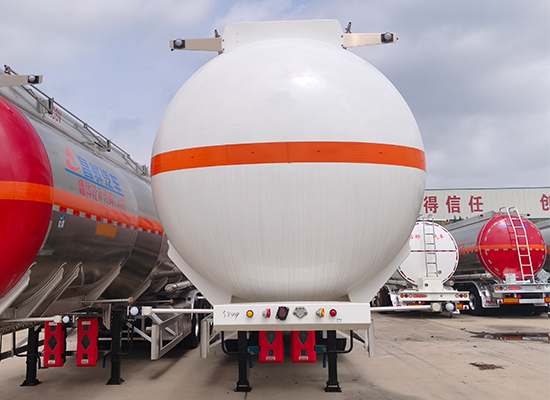
Tank Structure and Safety Design for Oil Transportation
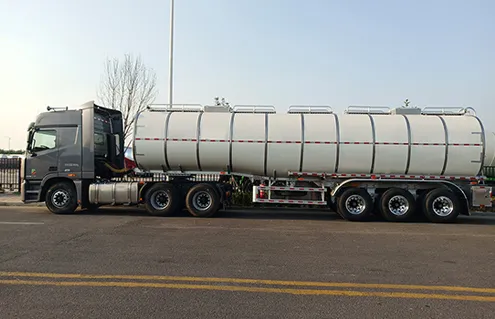
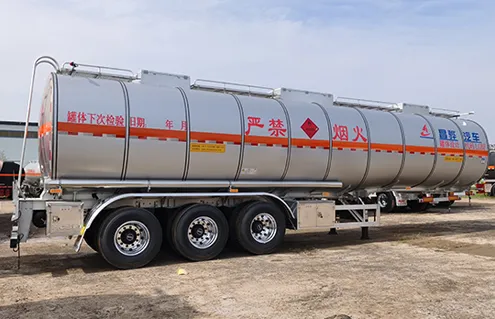
The tank is generally manufactured from high-strength carbon steel, with plate thickness selected according to tank capacity and the characteristics of the transported medium. Critical areas are reinforced with thicker material to withstand liquid surge and external impact during transportation. At least three anti-surge baffles are installed inside the tank. These baffles use an integral design with openings to effectively limit liquid movement, reduce the risk of rollover when cornering or traveling over rough roads, prevent air locking, and facilitate subsequent cleaning. According to relevant test data, heavy-duty tankers equipped with three or more anti-surge baffles can achieve an approximately 30% increase in the safe lateral acceleration limit when cornering under full load, significantly improving driving stability.
The tank is manufactured in accordance with long-service-life, vibration-resistant welding standards. Full-penetration welding is applied to the longitudinal seams, circumferential seams, and baffle connection points to reduce the risk of weld cracking caused by prolonged operation on rough roads. Standard safety equipment includes emergency shut-off valves, static grounding devices, pressure-relief systems, and manhole safety locking devices. The operating mechanisms are also protected with dustproof and waterproof seals to ensure reliable operation in dusty and rainy environments.
Protection for High-Temperature, Dusty and Corrosive Environments
The surfaces of the tank and chassis use a two-component industrial anti-corrosion coating system incorporating multiple layers of primer and topcoat.
This improves resistance to salt spray and corrosion and makes the vehicle better suited to coastal areas and regions with high humidity.
For vehicles intended for high-temperature mining areas, the thermal protection of the tank can also be optimized to reduce the temperature increase of the transported medium under prolonged direct sunlight.
Oil Tanker Trailer Applications Across African Markets
Heavy-duty oil tanker vehicles are now used in mining and energy projects across a number of African regions, with established applications in West Africa, East Africa, Central Africa and Southern Africa.
The specific transportation requirements vary according to regional industries and operating environments.
West Africa: Refinery and Industrial Fuel Transportation
West Africa is one of the continent's major regions for energy projects.
Large refinery projects in countries such as Nigeria have purchased batches of approximately 38 m³ heavy-duty fuel tankers for transporting refined petroleum products and industrial fuels from refineries to regional storage facilities and mining areas.
Large-scale tanker fleets can support downstream distribution networks following refinery commissioning and reduce reliance on imported refined-product distribution systems.
National oil companies in countries such as Ghana and Côte d'Ivoire have also introduced customized tanker vehicles to improve domestic fuel distribution and fuel supply for mining operations.
According to the original material, these vehicles have maintained stable operational availability after entering service, while maintenance costs have remained below those of the older fleets they replaced.
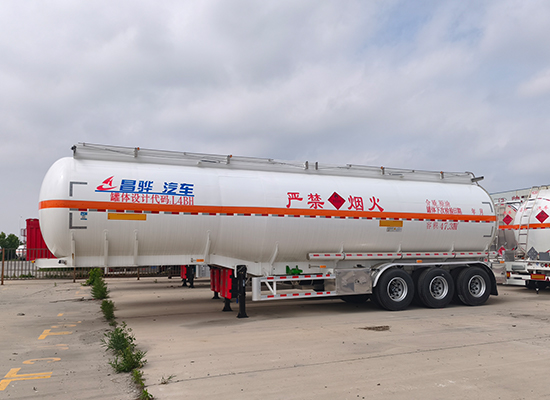
East Africa: Crude Oil Transport for Oilfield Projects
Oilfield development continues to advance across East Africa.
Oilfield projects in countries such as South Sudan and Uganda have introduced off-road crude oil tanker vehicles for short-distance crude oil transportation between well sites, gathering stations and intermediate storage facilities.
These vehicles place greater emphasis on chassis mobility and resistance to continuous vibration.
They can operate on temporary oilfield roads and muddy surfaces during the rainy season, helping maintain continuity in extraction operations and serving as an important part of the oilfield's ground logistics system.
Central and Southern Africa: Diesel Supply for Mining Operations
In metal and coal mining projects across Central and Southern Africa, heavy-duty tanker vehicles are primarily used to supply diesel to mining machinery and generator sets.
Mining transport routes are often characterized by poor road conditions and long round-trip distances.
Under these conditions, reliable heavy-duty tankers can help reduce operational losses caused by vehicle breakdowns and provide important support for stable mining operations.
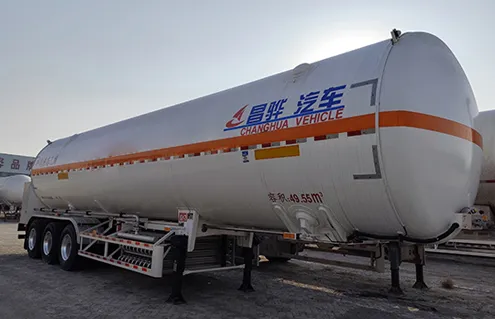
 Hebei Changhua Star Vehicle Co.,Ltd.