Amid the accelerating global transition toward cleaner energy structures, liquefied natural gas (LNG) has rapidly evolved from a supplementary energy source into a major component of the global energy supply, driven by its advantages in efficiency, low carbon emissions, and environmental performance. Yet the transportation of LNG has long faced a critical technical challenge. The storage temperature of minus 162°C places extremely demanding requirements on tank insulation performance. Even minimal heat penetration can trigger vaporization, leading to product loss, increased safety risks, and additional carbon emissions. For the LNG transport semi trailer industry, minimizing boil-off loss has become one of the most important indicators of technological capability in cryogenic transportation equipment.
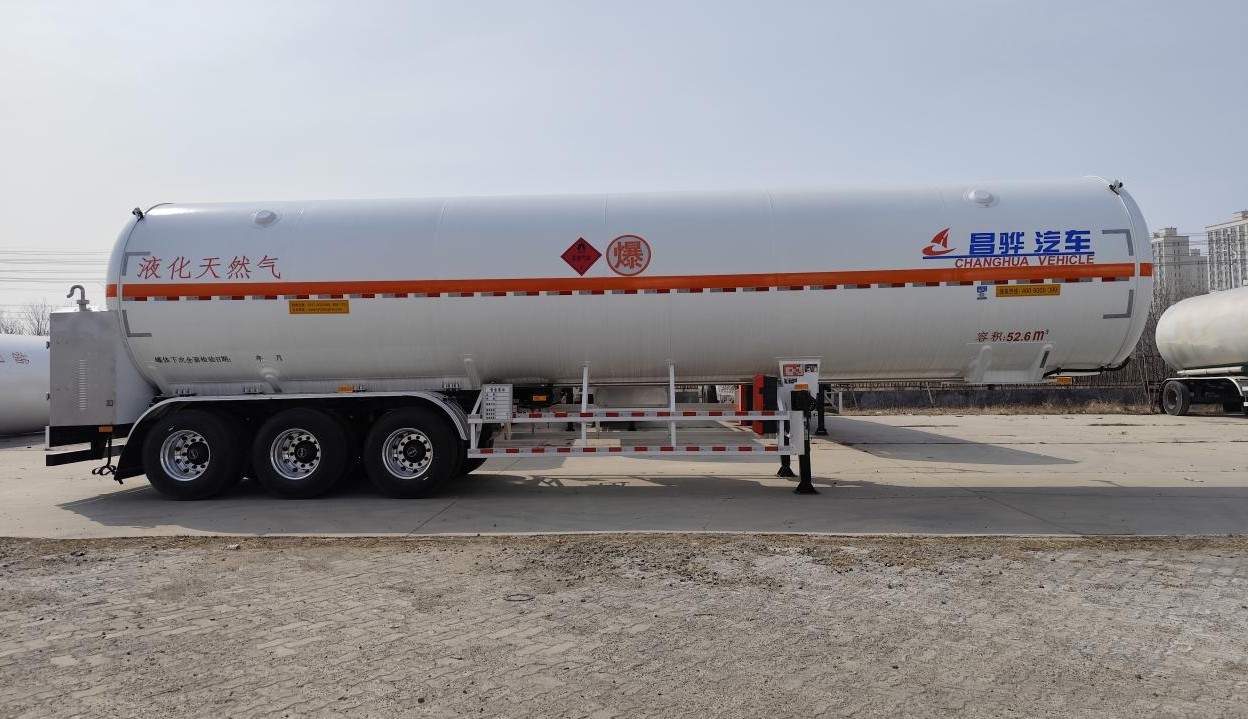
With more than three decades of expertise in the specialized vehicle industry, Hebei Changhua Star Vehicle Co., Ltd. (HCSV) has achieved a major breakthrough in cryogenic transportation technology. Its LNG transport semi trailer adopts a carefully engineered dual-layer vacuum insulation tank structure that reduces the daily evaporation rate to below 0.2% while extending operational range by more than 20%.
This technology provides a highly efficient transportation solution that combines safety, thermal stability, and cost efficiency, offering reliable equipment support for the clean energy logistics industry.
Dual Protection Through Advanced Materials and Structural Innovation
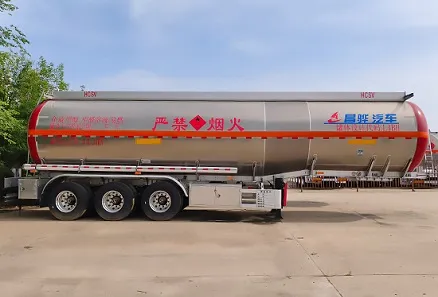
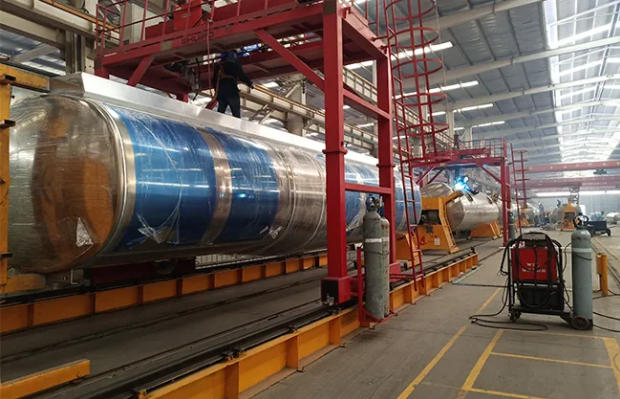
The core technological advantage of HCSV’s LNG tanker trailer lies in the precision engineering of its dual-layer vacuum insulation tank system. The structure integrates three coordinated layers — the inner vessel, insulation inter layer, and outer shell — to create a complete thermal protection barrier from the inside out. Rather than a simple multi-layer assembly, the system relies on optimized material selection and structural engineering at every level to maximize insulation performance. The inner vessel serves as the primary container for LNG storage and represents the first safety barrier for cryogenic media. HCSV uses 0Cr18Ni9 (304) austenitic stainless steel for the inner tank, reflecting a highly deliberate engineering choice. This material delivers outstanding low-temperature resistance and maintains stable mechanical properties even at temperatures as low as −196°C without brittle fracture. Such performance enables the tank to withstand prolonged cryogenic operating conditions during LNG transportation. In addition, its strong corrosion resistance and excellent weld ability help preserve long-term structural integrity and significantly reduce leakage risk at the source.
The outer shell serves primarily as a protective and load-bearing structure, providing mechanical support and maintaining overall system stability. Although it does not come into direct contact with the cryogenic medium, its reliability remains critical to the safety of the entire LNG transport semi trailer system. HCSV uses Q345R pressure vessel carbon steel for the outer shell. This material offers high strength, cost efficiency, and excellent fabrication performance. It effectively withstands external impact and compression while providing stable structural support for maintaining vacuum pressure within the insulation interlayer. The outer shell is designed for ambient-temperature operation, but its structural configuration has been scientifically optimized to endure external forces generated under complex road and transportation conditions, ensuring comprehensive protection for the inner vessel. In addition, the outer surface receives anti-corrosion coating treatment to improve resistance against corrosion and rust, thereby extending the overall service life of the tank system.
Extreme Thermal Insulation Through Composite Vacuum and Adsorption Technology
If the inner vessel and outer shell form the structural framework of the tank system, the insulation inter layer defines its thermal performance. In HCSV’s LNG transport semi trailer, the inter layer adopts a composite insulation structure combining aluminum foil and glass fiber paper. This design effectively suppresses all three major modes of heat transfer: thermal conduction, convection, and radiation.
More specifically, the inter layer incorporates multiple layers of aluminum foil reflective barriers that function like mirrored thermal shields inside the tank structure, significantly reducing heat transfer caused by thermal radiation. Filling materials such as glass fiber paper further block conductive heat transfer pathways. On this basis, the insulation inter layer is evacuated to a high-vacuum state to minimize convective heat transfer generated by residual gas molecules. To maintain long-term vacuum stability, adsorbent materials are also integrated into the interlayer system. These materials continuously absorb residual gas molecules and moisture, ensuring stable and durable insulation performance over extended operation periods.
Industry research indicates that after adopting high-vacuum multilayer insulation technology, a 40 m³ LNG tanker trailer can achieve a daily evaporation rate below 0.3%, with a non-loss storage period of up to 20 days. Building on this technical foundation, HCSV has further optimized the insulation system and reduced the daily evaporation rate to below 0.2%, meaning vaporization loss accounts for less than two-thousandths of the total LNG volume per day. Within internationally recognized performance evaluation standards, daily evaporation rate is regarded as one of the most critical indicators of cryogenic insulation performance for low-temperature storage and transportation equipment. Lower values indicate stronger thermal insulation capability and lower transportation loss.
Extended Range Performance Redefining LNG Transportation Efficiency
The improved insulation performance delivered by HCSV’s dual-layer vacuum insulation structure translates directly into one of the most valuable operational advantages for customers: a substantial increase in transportation range. According to HCSV’s performance calculations, this technology improves vehicle endurance by more than 20%. This improvement can be understood from two perspectives. First, the significantly lower evaporation rate greatly reduces LNG loss caused by natural vaporization during transportation. As a result, a larger proportion of the loaded cargo reaches end users, effectively increasing usable transport capacity under the same loading conditions. Second, with the daily evaporation rate reduced to below 0.2%, pressure buildup inside the tank slows considerably. This substantially lowers the frequency of safety venting and allows the tank system to maintain stable operating conditions for longer periods. The result is a greater transportation radius and more flexible logistics scheduling for the LNG transport semi trailer.
It is important to note that a daily evaporation rate of 0.2% is not a universal industry standard. In practice, evaporation rate requirements vary significantly across different types of LNG storage and transportation equipment. For example, in the field of vehicle-mounted LNG cylinders, some smaller storage tanks may operate with a static daily evaporation rate of around 1.5%. By contrast, HCSV’s LNG transport semi trailer is classified as a large-scale mobile cryogenic transportation system. Maintaining the daily evaporation rate below 0.2% reflects a highly advanced technical standard within the large-capacity cryogenic transport sector and demonstrates strong international competitiveness.
According to comparative industry data, current standards for large mobile cryogenic storage and transportation equipment generally require the daily evaporation rate to remain below 0.3%. Among advanced products in the industry, the typical range is between 0.1% and 0.3%. By controlling the daily evaporation rate below 0.2%, HCSV positions its LNG transport semi trailer among the leading products in its category.
Dual Benefits: Cost Efficiency and Low-Carbon Transportation
The advantages created by HCSV’s dual-layer vacuum insulation technology extend far beyond improved transportation range. Its broader value becomes even more evident when evaluated from both economic and environmental perspectives.
From an operational standpoint, lower evaporation loss translates directly into measurable cost savings for transportation companies. Based on current LNG market prices, every ton of reduced vaporization loss can save several thousand yuan in direct operating costs. For long-haul fleets with annual operating distances exceeding 100,000 kilometers, the cumulative financial benefit is substantial. A range increase of more than 20% also reduces the frequency of refueling stops over the same transportation distance. This improves fleet turnover efficiency while lowering the time cost and scheduling pressure associated with repeated refueling operations.
From an environmental perspective, LNG vaporization is not only a form of energy loss but also a source of greenhouse gas emissions. Methane has a global warming potential many times higher than that of carbon dioxide. By maintaining an ultra-low daily evaporation rate, HCSV’s LNG tanker trailer for sale reduces product loss while effectively lowering carbon emissions caused by gas release during transportation. This low-emission design aligns closely with China’s "dual carbon" strategy and supports the transportation industry’s transition toward greener and lower-carbon operations.
Safety at the Core: A Comprehensive Multi-Level Protection System
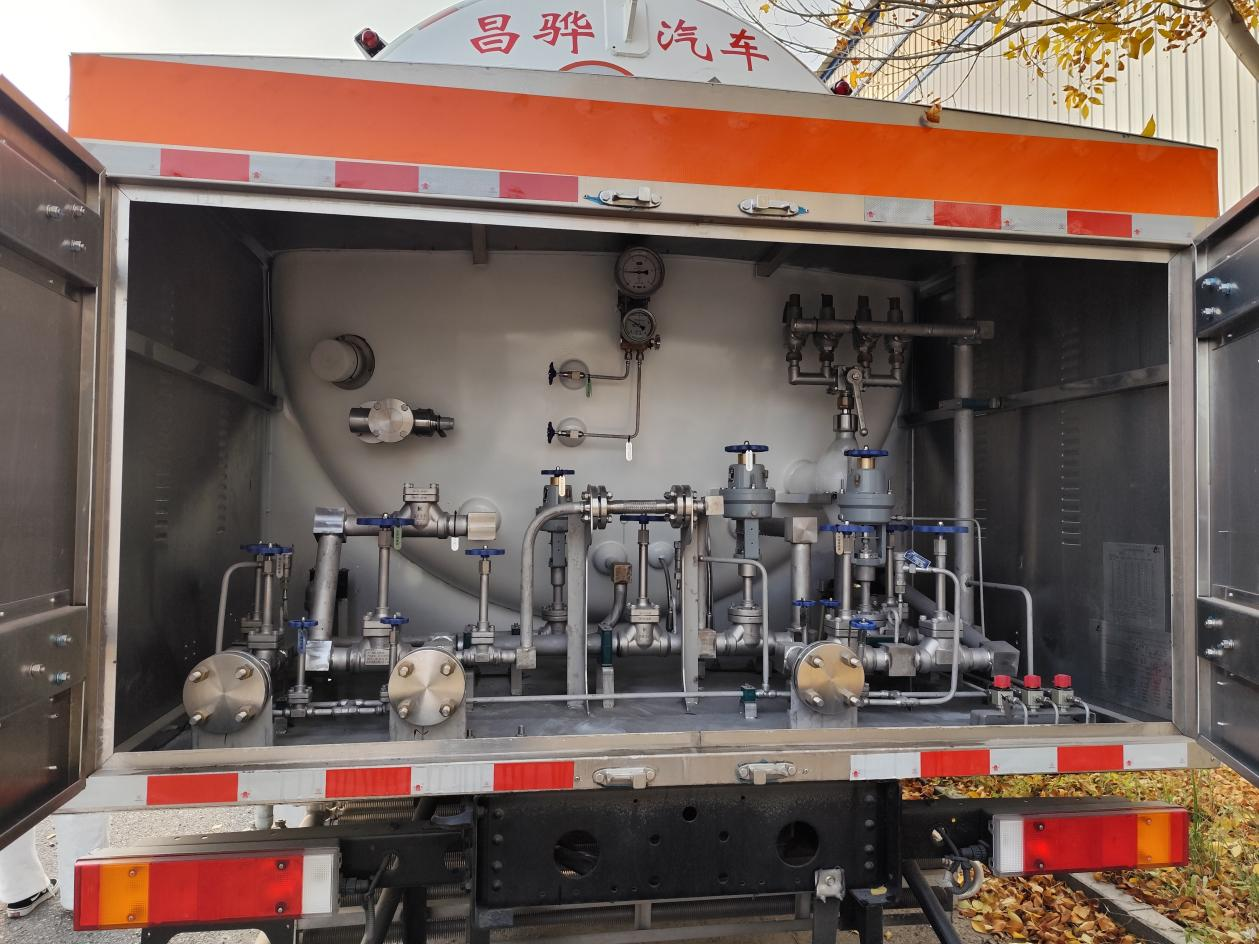
Outstanding insulation performance must be matched by equally rigorous safety protection standards. HCSV’s LNG trailer is developed in strict accordance with national and industry regulations, including the Safety Technical Requirements for Vehicles Transporting Dangerous Goods (GB21668-2025). The company has established a comprehensive safety framework built around three critical dimensions: tank system safety, driving safety, and emergency protection. This integrated approach ensures reliable performance throughout the entire transportation process.
At the tank system level, the vehicle is equipped with two primary and two secondary safety valves, totaling four units. These valves ensure rapid pressure relief under over pressure conditions and effectively prevent the risk of tank rupture or explosion. The tank is also fitted with an emergency shut-off valve with a response time of no more than 3 seconds. It supports both manual and automatic activation modes. In emergency situations such as collision or leakage, the system can quickly cut off medium flow, minimizing potential safety risks. In addition, anti-surge baffles are installed inside the tank. These structures reduce liquid sloshing during transportation, lower the risk of vehicle rollover, and significantly improve driving stability.
Qualifications and Quality Control In terms of certifications and quality management, HCSV holds both the Special Equipment Design License and the Special Equipment Manufacturing License. The company has obtained certification for the ISO 9001 Quality Management System, the Environmental Management System, and the Occupational Health and Safety Management System of China. Its core products have also passed European standard certification, providing a solid institutional foundation for consistent product quality and compliance with international standards.
Policy Tailwinds Driving a New Market Blue Ocean
From a broader industry perspective, the breakthrough achieved by HCSV in dual-layer vacuum insulation technology comes at a time of sustained upward momentum in the sector.
On the demand side, consumption of vehicle-used LNG is experiencing rapid growth. From January to September 2025, China’s vehicle LNG consumption reached 20.27 million tons, representing a year-on-year increase of 22%, with logistics transportation serving as the primary growth driver. The economic advantages of natural gas-powered heavy-duty trucks are becoming increasingly evident. Based on a 49-ton truck with an annual mileage of 200,000 kilometers, average fuel consumption is approximately 34 kg per 100 km. At an LNG price of 4.27 RMB/kg in July 2025, fuel cost savings reach about 84 RMB per 100 km compared with diesel trucks, translating into annual savings of around 170,000 RMB per vehicle. Driven by both economic efficiency and environmental benefits, demand for LNG transport equipment continues to rise, while the industry places increasingly high expectations on product quality and performance.
On the policy and regulatory front, standardization efforts are accelerating. National standards such as Requirements for the Use of Mobile Vacuum Insulated Cryogenic Vessels are currently under development or open for public consultation, reflecting the continuous refinement of industry norms. The Hazardous Chemicals Safety Law was reviewed and adopted by the Standing Committee of the National People’s Congress in December 2025, marking a new phase in the legalization and regulatory governance of hazardous materials storage and transportation safety. The simultaneous advancement of technical standards and legal frameworks is expected to accelerate the industry’s transition toward higher technological levels and improved product quality in cryogenic transportation equipment.
From a market scale perspective, research data shows that the global cryogenic equipment market reached RMB 51.169 billion in 2025, while the Chinese market accounted for RMB 21.199 billion. By 2032, the global market is projected to reach RMB 119.002 billion, with a compound annual growth rate (CAGR) of 12.81% during the forecast period. This substantial growth potential provides ample development space for technology-leading enterprises with strong R&D capabilities and advanced product portfolios.
An Innovation-Driven DNA Fueling Technological Transformation
Looking back at HCSV’s technological evolution, the breakthrough in its dual-layer vacuum insulation system is not an isolated achievement, but a natural outcome of its long-term innovation-driven strategy.
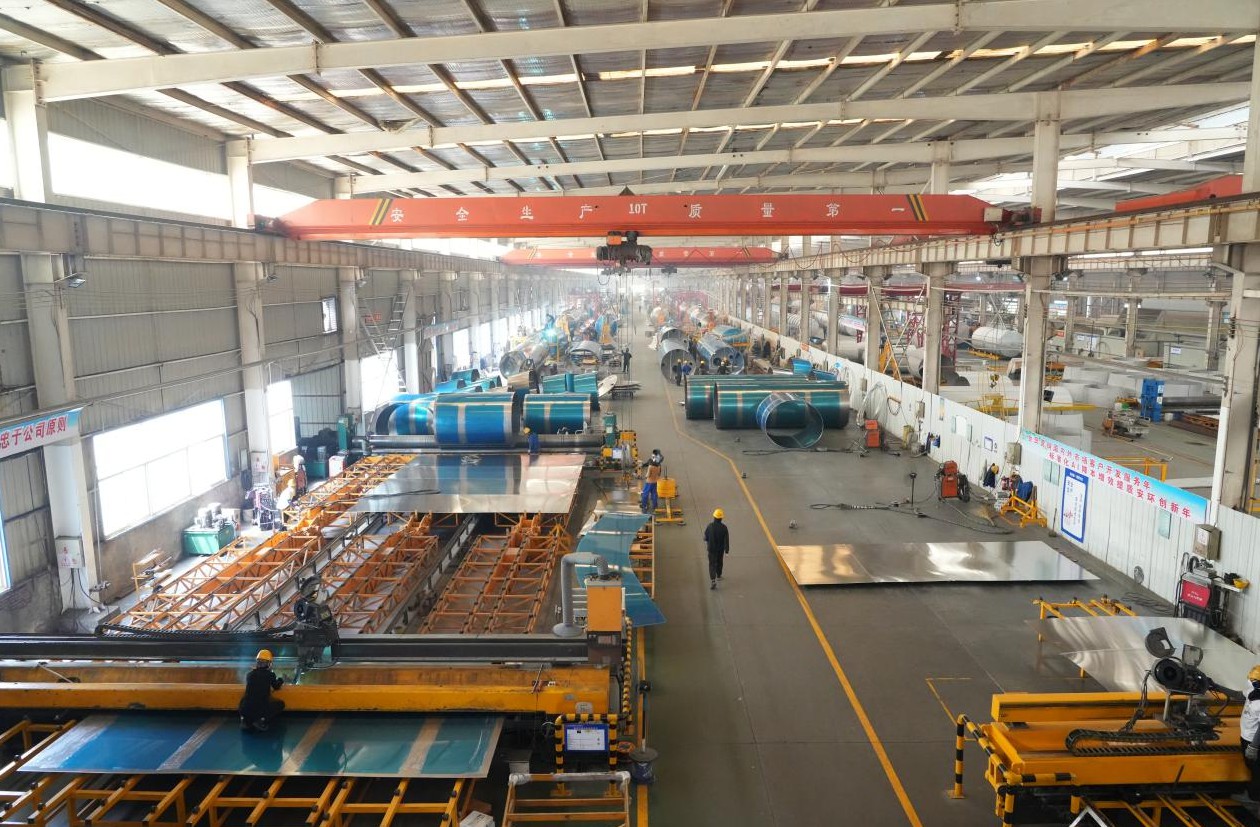
Founded in 1994 and headquartered in Huanghua City, Hebei Province, HCSV has grown over three decades from a small automotive trading company into a comprehensive specialized vehicle manufacturer integrating R&D, production, sales, trade, and logistics. Today, the company employs over 1,000 staff and operates a 530,000-square-meter manufacturing base. It has built six specialized production lines and developed a diversified product portfolio covering 10 major series and more than 180 product types. Its products serve both domestic and international markets, with exports reaching developed regions including Europe and North America.
In building its innovation capacity, HCSV has continuously increased R&D investment and established an engineering and technical team of 62 professionals, including 15 senior engineers. The team spans multiple disciplines, including vehicle engineering, materials science, and mechanical design.
The company has been recognized as a National High-Tech Enterprise, a Provincial "Specialized, Refined, Differential and Innovative" SME, and a Provincial Enterprise Technology Center. It holds 109 patents in total, including more than 70 utility model patents. In the field of specialized vehicle light weighting, HCSV has also established a provincial-level technology innovation center to systematically advance material innovation, structural optimization, and process improvement.
It is precisely this innovation-driven corporate DNA that has enabled HCSV to progress in key technologies such as cryogenic insulation from "following" to "running alongside" and, in certain areas, to "leading locally."
Conclusion
Against the backdrop of global consensus on clean energy, the technological level of cryogenic transportation equipment has, to a certain extent, become a key determinant of both operational efficiency and safety standards within a country’s clean energy logistics system. With its dual-layer vacuum insulation structure at the core, HCSV has reduced the daily evaporation rate to below 0.2% and achieved a range improvement of more than 20%. This not only delivers tangible economic benefits for transportation operators but also contributes corporate strength to green logistics under China’s "dual carbon" strategy.
Looking ahead, as the penetration rate of LNG continues to rise in the transportation sector and the cryogenic equipment market further expands, HCSV will continue to strengthen R&D in cryogenic insulation, lightweight design, and intelligent control. The company is committed to advancing China’s cryogenic storage and transportation equipment industry from "manufacturing" to "intelligent manufacturing" powered by continuous technological innovation that ensures safer and more efficient clean energy transportation.
 Hebei Changhua Star Vehicle Co.,Ltd.