As global food trade networks become more deeply integrated and consumers pay increasing attention to food safety, bulk liquid food transportation is shifting from a traditional 'transport tool' to a core node of supply chain quality control. According to an industry research report released by Mordor Intelligence, the global food-grade tanker truck market will reach USD 5.73 billion in 2025 and is expected to grow to USD 7.62 billion by 2030, with a compound annual growth rate of 5.88%. This market growth is driven both by the steady rise of cross-regional trade in bulk liquid foods such as palm oil, edible vegetable oil, concentrated juice and grain syrup, and by the tightening of food safety regulatory systems worldwide, which places higher mandatory requirements on transport equipment in terms of material safety, temperature control accuracy and full-process traceability.
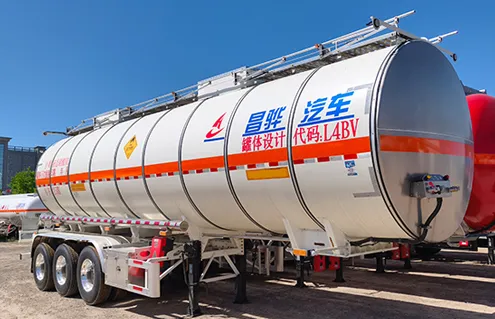
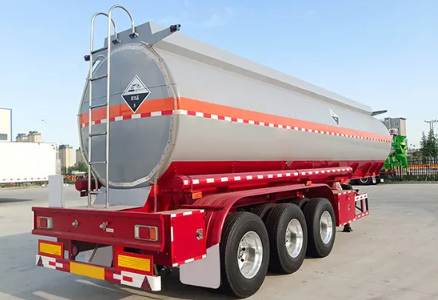
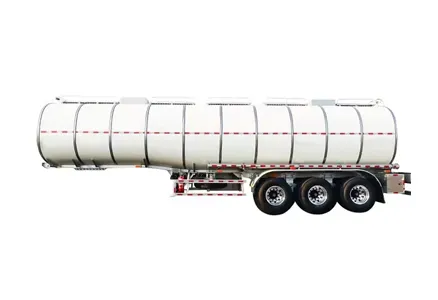
Against this industry background, Hebei Changhua Star Vehicle Co., Ltd., supported by more than 30 years of technical accumulation in special-purpose vehicle manufacturing, has launched a new generation of food-grade aluminum alloy insulated tanker trailers for the global liquid food transportation market. Built around an aluminum alloy tank body that meets international food-contact standards, the product integrates a multi-layer composite insulation structure, full-temperature-range precision control system and full-process sanitary design. It is widely suitable for trunk transportation of edible vegetable oil, high-fructose corn syrup, concentrated juice, food flavorings, plant extracts and other liquid food products, building a full-chain quality assurance system from origin to terminal for cross-border and cross-regional food supply chains.
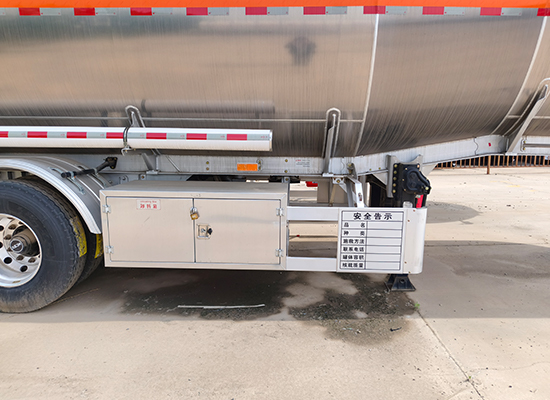
I. Global Changes: Liquid Food Transportation Enters a New Stage of Compliance and Precision
1. Global Regulation Is Tightening and Food Safety Standards Continue to Upgrade
Currently, major economies around the world have established strict control systems for food-contact materials and transportation processes. Compliance of transport equipment has become a hard threshold for entering international markets.
In the U.S. market, the Food and Drug Administration (FDA) regulates food-contact materials throughout the chain under the 21 CFR system of the Code of Federal Regulations. Section 21 CFR §189.110 sets composition and migration-limit requirements for aluminum and aluminum alloy materials, requiring food-contact aluminum alloys to strictly control heavy metal impurities such as lead and cadmium. Under normal use conditions, substances migrating into food must not endanger human health. For tank bodies with protective coatings, compliance with 21 CFR §175.300 for resinous coatings is also required, and long-term safety must be verified through high-temperature immersion migration tests.
In the EU market, Framework Regulation (EC) No 1935/2004 on food-contact materials establishes three core principles: material inertness, no harmful migration and no change to food sensory characteristics. It requires that, under foreseeable use conditions, the quantity of substances migrating into food must not endanger human health or cause unacceptable changes in food composition or sensory quality. For metallic materials, the EU has also issued guidelines on metals and alloys, clarifying migration limits for 23 heavy metals in aluminum and aluminum alloys, and requiring enterprises to provide declarations of compliance (DoC) and complete technical documents for inspection.
In addition to material safety, temperature control during transportation has also been incorporated into global food safety management systems. HACCP identifies transport temperature control as one of the critical control points, requiring companies to record and monitor the temperature of liquid foods throughout transportation and ensure fluctuations remain within the permitted range of each product. The Codex Alimentarius Commission's General Principles of Food Hygiene also clearly state that perishable liquid foods must be transported with appropriate temperature-control equipment to maintain food within safe temperature ranges.
2. Cross-Regional Trade Expansion Continues to Drive Demand for Temperature-Controlled Transport
From the perspective of global trade patterns, production and consumption of liquid foods are geographically separated to a significant extent. Palm oil from Southeast Asia, soybean oil from North America, olive oil from the Mediterranean, concentrated juice from South America and grain syrup from East Asia all need to be transported over long trunk routes to processors and distribution terminals around the world. Transport distances often reach thousands of kilometers and pass through multiple climate zones, from the hot and dry deserts of the Middle East to the cold regions of Northern Europe, from humid Southeast Asia to inland plateaus with large day-night temperature differences. Such dramatic external environmental changes create demanding requirements for tank insulation and thermal protection.
Industry data shows that food-grade tankers with insulation functions currently account for more than 60% of global bulk liquid food transportation and continue to increase. For high-viscosity products such as grain syrup and honey, low-temperature environments can sharply increase viscosity or even cause solidification, affecting unloading efficiency and potentially damaging product quality. For edible vegetable oils, long exposure to high temperatures can accelerate oxidation and rancidity, shortening shelf life. Conventional tanks can no longer meet the requirements of long-distance transportation of high-quality liquid foods, and insulated tankers with precise temperature control are becoming a standard configuration in the industry.
3. Three Common Pain Points in Traditional Transportation Models
For a long time, the global bulk liquid food transportation sector has faced three major industry pain points that restrict improvements in supply chain efficiency and quality safety.
First, material compliance is insufficient and sanitary control is difficult. Traditional carbon steel tanks rely on internal anti-corrosion coatings to achieve food-contact safety, but these coatings are prone to wear, peeling and aging after long-term use. This may cause foreign matter contamination and tank corrosion, increasing food safety risks. At the same time, welds, corners and other structural blind spots in carbon steel tanks can retain materials and are difficult to clean thoroughly. When switching between different media, cross-contamination risks arise, making it difficult to meet HACCP sanitary requirements.
Second, insulation performance is inadequate and temperature-control precision is low. Most traditional insulated tankers use spliced insulation layers, where joints can create cold-bridge or thermal-bridge effects and lead to rapid insulation degradation. During long-distance transportation, the temperature of the media inside the tank fluctuates noticeably with ambient temperature, and changes within 24 hours can exceed 5°C. This cannot meet the temperature-control requirements of high-quality liquid foods. Under extreme climate conditions, temperature exceedance can cause cargo quality deterioration or even scrapping, bringing economic losses to cargo owners and logistics companies.
Third, tank tare weight is high and operating efficiency is restricted. Steel tanks are heavy and occupy effective payload capacity under road weight-limit regulations in different countries, resulting in lower single-trip transportation volume and higher unit logistics costs. Against the backdrop of high global fuel costs and normalized overload control, transport companies have an increasingly urgent demand for lightweight equipment. Lightweight design has become a core path for reducing full life-cycle operating costs.
II. Material Innovation: Food-Grade Aluminum Alloy Tanks Build a Strong Foundation for Global Food Safety
To address industry pain points, HCSV integrates food-grade aluminum alloy material technology with liquid food transportation scenarios and creates an all-aluminum alloy insulated tank structure. This resolves multiple limitations of traditional steel tanks at the material source and fully adapts to food safety regulatory requirements in mainstream global markets.
1. Compliant Materials Meet International Food-Contact Standards
The inner tank of the HCSV Aluminum Alloy Insulated Tanker Trailer is manufactured from 3003/5052 series food-grade aluminum alloy plates. Heavy metal impurities such as lead, cadmium and arsenic are strictly controlled from the material source, meeting food-contact material standards in multiple jurisdictions, including U.S. FDA 21 CFR, EU (EC) No 1935/2004 and China GB 4806.9. Aluminum alloy itself has excellent chemical inertness. In neutral to weakly acidic liquid food environments such as edible vegetable oil, syrup and concentrated juice, it remains stable, does not release harmful substances, and does not react chemically with media to change food flavor or composition. This fundamentally avoids the risks of coating peeling and rust contamination associated with carbon steel tanks.
Tank welding uses food-grade welding wire, and automated welding ensures smooth and even weld formation. The inner wall is finely polished, with surface roughness controlled at an advanced industry level, effectively reducing material adhesion and microbial attachment. All internal corners of the tank use large-radius transitions to eliminate cleaning dead spots and fully support CIP (clean-in-place) systems for all-round flushing. This ensures sanitary standards are met before each media change, prevents cross-contamination between different food categories, and satisfies HACCP and ISO 22000 food safety management requirements.
2. Extreme Lightweight Design Improves Global Operating Efficiency
The most significant advantage of aluminum alloy is its extreme lightweight performance. Aluminum has a density of about 2.7 g/cm³, only around one-third that of steel. Under the same volume and structural strength conditions, an aluminum alloy tank can achieve substantial weight reduction compared with a traditional steel tank. Taking a 40 m³ insulated tanker as an example, the curb weight of an aluminum alloy tank is several tons lower than that of a steel tank with the same volume, creating a remarkable weight-reduction effect.
Lower tare weight translates directly into real operating value. Under the gross vehicle weight limits of road freight regulations around the world, effective payload capacity increases significantly, single-trip transport volume rises, and the transport cost per unit of cargo decreases accordingly. At the same time, lightweight vehicle design improves fuel economy and reduces energy consumption and carbon emissions during driving, aligning with the global logistics industry's trend toward low-carbon development. For logistics companies operating trunk routes year-round, this lightweight advantage can accumulate into considerable cost savings over the vehicle's full life cycle.
3. Natural Corrosion Resistance Extends Equipment Service Life
Aluminum alloy naturally provides good corrosion resistance. A dense oxide protective film forms spontaneously on the material surface, effectively resisting corrosion from air, moisture and various liquid food media. For edible vegetable oil, plant extracts, grain syrup and other food media, aluminum alloy tanks can be used for a long time without additional internal anti-corrosion coatings, completely avoiding maintenance costs and sanitary risks caused by coating aging or peeling.
From a full life-cycle perspective, aluminum alloy tankers have a significantly longer service life than ordinary carbon steel tankers and can operate for more than 10 years under normal maintenance conditions. After vehicle retirement, aluminum alloy materials have high recycling value and a residual value much higher than steel, which aligns with the global development direction of circular economy and green manufacturing and helps overseas customers reduce asset depreciation costs.
4. Multiple Safety Designs Adapt to Complex Transportation Scenarios
In terms of driving safety, aluminum alloy tanks also have strong advantages. On the one hand, aluminum alloy materials offer good energy absorption. In a collision, they can absorb impact energy through plastic deformation, reducing the risk of tank rupture and media leakage. On the other hand, aluminum alloy has excellent electrical conductivity, making the tank less prone to static accumulation and avoiding safety hazards caused by static sparks, especially when transporting flammable and explosive media such as vegetable oil.
At the same time, reduced tank weight lowers the overall vehicle center of gravity and improves driving stability, reducing rollover risks during high-speed cornering or emergency avoidance. This enhances driving safety on complex roads such as mountainous and plateau areas and helps the vehicle better adapt to road conditions in different regions worldwide.
III. Precise Temperature Control: Multi-Layer Composite Insulation Delivers Stable Performance Across All Temperature Ranges
Temperature-control capability is a core performance indicator for insulated tanker trailers. Based on the aluminum alloy tank body, HCSV has built a three-in-one temperature-control technology system combining structural insulation, material insulation and intelligent temperature control. It can maintain stable media temperature inside the tank in extreme ambient temperatures from -30°C to 50°C, delivering reliable temperature control across all temperature ranges and operating scenarios.
1. Multi-Layer Composite Insulation Eliminates Cold-Bridge and Thermal-Bridge Effects
The HCSV Aluminum Alloy Insulated Tanker Trailer adopts an interlayer insulation design. High-performance closed-cell polyurethane foam is filled between the aluminum alloy inner tank and outer protective layer to form a complete insulation barrier. Polyurethane features low thermal conductivity, long-lasting insulation performance, good moisture resistance and long service life, making it a mainstream insulation material in global food-grade insulated transport.
The insulation layer thickness is optimized through thermodynamic simulation and matched to target temperature-control accuracy and operating scenarios, ensuring stable media temperature inside the tank even under extreme ambient temperatures. The foaming process uses integral injection molding, creating a dense and uniform insulation layer without spliced gaps. This effectively avoids the cold-bridge and thermal-bridge effects commonly seen in spliced insulation layers. Weak heat-loss points such as tank heads, manholes, discharge outlets and valves are also reinforced with additional insulation, achieving uniform whole-surface insulation and eliminating temperature-control blind spots.
The outer protective layer uses high-strength aluminum alloy skin with excellent impact resistance and weather resistance. It can resist flying stones, sunlight and rain during transportation, protect the internal insulation layer from damage, and ensure long-term stable insulation performance without degradation. This makes the product suitable for harsh environments such as deserts, coastal areas and cold regions.
2. Wide Temperature Adaptability Covers Multiple Media Requirements
For different storage and transportation temperature requirements of liquid foods, the HCSV insulated tanker offers wide temperature adaptability. It can cover normal-temperature insulation, heated insulation and other operating conditions, meeting the transportation needs of different regions and product categories worldwide.
For edible vegetable oil and other media requiring constant-temperature storage, the insulation structure effectively blocks external heat, slows the rise of internal temperature, reduces oxidation risks and maintains product freshness. For high-viscosity media such as high-fructose corn syrup, glucose syrup and honey, the vehicle can be equipped with tank heating systems that support external steam, hot water or on-board heating devices to maintain and compensate for media temperature, preventing viscosity increase or solidification under low-temperature conditions and ensuring smooth unloading.
The temperature-control range can be customized according to the characteristics of the customer's transported media. From normal-temperature insulation to medium-temperature heating, reliable operation can be achieved. The inner wall temperature and overall media temperature remain uniform, avoiding quality changes caused by local temperature differences and ensuring consistent quality throughout the tank.
3. Multi-Point High-Precision Monitoring Meets Global Traceability Requirements
Temperature monitoring is the core of temperature-control management. HCSV insulated tankers are equipped with multi-point high-precision temperature sensors. Temperature probes are arranged at different front, middle and rear positions of the tank, as well as at upper, middle and lower liquid levels, comprehensively collecting temperature distribution data inside the tank. This avoids the deviation caused by single-point measurement and accurately reflects the overall temperature status of the media.
The temperature-control display terminal is installed on the operating side of the vehicle, allowing drivers and loading/unloading personnel to view real-time temperature values at each point. The system supports upper and lower temperature threshold settings. When the internal temperature exceeds the set range, audible and visual alarms are automatically triggered to remind operators to take timely measures. Temperature-control data can be automatically stored to form a complete transport temperature record. The data retention period meets regulatory requirements in different countries, supports export and traceability queries, and fully matches the global food supply chain's requirements for full-process temperature-control traceability.
4. Pre-Temperature Control Before Loading Reduces Quality Fluctuation Risks
Following professional standards for international bulk liquid food transportation, HCSV fully considers pre-loading temperature control in product design. When the temperature difference between the tank interior and the media to be loaded is too large, problems such as sudden local temperature changes and condensation on the tank wall can occur, affecting food quality and stability.
Therefore, the vehicle temperature-control system supports pre-conditioning. Before loading, the internal tank temperature can be adjusted to a level close to the temperature of the media to be loaded, ensuring a smooth temperature transition during loading and reducing the impact of thermal shock on food quality. This design is consistent with the common international food transportation practice that the temperature difference between the container inner wall and the food should not exceed 5°C, reflecting the product's comprehensive response to international standards.
IV. Full-Chain Protection: Systematic Design Covers Quality Control Throughout the Transport Process
Quality assurance in liquid food transportation is a systematic project covering loading, transportation, unloading and cleaning. From a full-chain perspective, HCSV refines the design of each operating stage to achieve controllable quality and efficient operation throughout the process.
1. Loading: Sealed Anti-Contamination and Standardized Operation
Loading is the first checkpoint for preventing external contamination from entering the tank. The manhole cover of the HCSV insulated tanker uses food-grade sealing strips with excellent oil resistance, temperature resistance and anti-aging performance. Once closed, it forms a reliable sealed barrier to prevent dust, rainwater, insects and other external contaminants from entering the tank and polluting the media during transportation.
The inside of the manhole is equipped with an anti-overflow structure and a venting device. This both prevents media overflow during loading and maintains pressure balance inside the tank, preventing abnormal pressure caused by temperature changes during transportation. The feed interface can be matched with international-standard quick couplings according to customer requirements, making it compatible with mainstream loading and unloading systems at filling stations worldwide and improving loading versatility and operating efficiency.
2. Transportation: Flow Stabilization, Impact Prevention and High Structural Reliability
During long-distance transportation, the sloshing of liquid media inside the tank affects the tank body and vehicle driving stability. HCSV installs multiple anti-wave baffles inside the tank to divide the internal space into several connected chambers, effectively reducing impact forces caused by liquid surge, improving driving smoothness, and reducing liquid sloshing during braking and turning. This both protects the tank structure and enhances driving safety.
The overall tank structure is optimized through finite element analysis and provides sufficient strength and rigidity to withstand various load conditions under full-load operation. All pressure-bearing components undergo strict sealing tests to ensure zero leakage throughout transportation. For long-distance and high-intensity cross-border transport scenarios, key components use internationally recognized brands, improving equipment reliability and global spare parts compatibility.
3. Unloading: Low Residue, Easy Operation and Hygienic Design Without Dead Spots
Unloading design directly affects operating efficiency and media loss. The unloading system of the HCSV insulated tanker adopts a sanitary design. Valves and pipelines use food-grade materials, with smooth inner walls and no dead corners. Unloading is thorough, and residual liquid is controlled at a very low level, reducing material waste and making cleaning easier.
The position and structure of the discharge outlet are optimized through fluid mechanics to ensure that media can flow out smoothly under gravity. The unloading interface can be matched with international-standard quick connectors for seamless connection with receiving tank systems around the world. For high-viscosity media that require heated unloading, the unloading pipeline can be equipped with heat-tracing insulation to prevent media from cooling and solidifying in the pipeline, ensuring smooth unloading.
4. Cleaning and Maintenance: Full-Tank Cleaning Without Dead Spots and Low Operating Cost
Tank cleaning is a critical step in preventing cross-contamination and ensuring food safety. Thanks to the smooth characteristics of the aluminum alloy inner wall and the full-radius transition design, the cleaning efficiency of the HCSV insulated tanker is significantly higher than that of traditional carbon steel tanks. Cleaning liquid from the CIP system can evenly flush all internal tank surfaces without dead spots, shortening cleaning time, reducing water consumption and delivering stable, reliable cleaning results.
In daily maintenance, the aluminum alloy tank body does not require coating repair or anti-corrosion treatment. Routine work mainly involves checking seals and valves, resulting in a small maintenance workload and low maintenance cost. For overseas customers, lower maintenance demand means higher vehicle attendance and lower operating costs, effectively improving asset operating efficiency.
V. Global Adaptability: Customization Capabilities Support Diverse International Market Needs
As a special-purpose vehicle manufacturer serving global markets, HCSV fully considers differences in regulations, operating conditions and customer requirements across countries and regions. It provides flexible customized solutions to ensure products are perfectly matched to local markets.
In chassis compatibility, HCSV insulated tank semi-trailers can work with mainstream tractor brands worldwide and meet regulatory requirements such as axle-load limits and external dimensions in different regions. For special scenarios such as right-hand-drive markets, cold regions and tropical regions, vehicle configurations can be adjusted accordingly, including enhanced insulation, upgraded anti-corrosion and adaptation to local voltage standards.
In product customization, capacity can be flexibly selected from 20 m³ to 60 m³. Single-compartment and multi-compartment designs are supported, allowing one vehicle to transport multiple different media. Insulation thickness, heating method and temperature-control system configuration can all be customized according to the customer's media and temperature-control needs. Valves, couplings, manholes and other components can also use internationally recognized brands to meet the quality requirements of high-end customers.
In compliance support, HCSV can provide complete product technical documents and material test reports to assist customers with local market access certification and registration. With extensive export experience, the company's products have been sold to the Middle East, Africa, Southeast Asia, Central Asia and many other countries and regions. HCSV is familiar with certification processes and regulatory requirements in different markets and can provide overseas customers with full-process support from model selection to delivery.
In service assurance, HCSV has established a complete overseas service system covering remote technical support, spare parts supply and on-site service to ensure stable vehicle operation throughout the full life cycle. The company follows a customer-centered service philosophy and provides professional, efficient and timely technical support and after-sales service for global customers, removing their operational concerns.
Conclusion
As the global food supply chain upgrades toward higher quality, stronger compliance and greater efficiency, technological iteration in liquid food transportation equipment has become an inevitable industry trend. The HCSV food-grade Aluminum Alloy Insulated Tanker Trailer provides a Chinese solution for global liquid food transportation that combines safety, economy and reliability through material safety aligned with international standards, full-temperature-range precise control, full-chain sanitary design and global adaptability.
In the future, HCSV will continue to focus on special-purpose vehicle technology R&D, closely follow global food industry trends and regulatory requirements, continuously optimize product performance and expand application scenarios. With higher-quality products and services, HCSV will help safeguard global liquid food transportation and support the stability and upgrading of the global food supply chain.
 Hebei Changhua Star Vehicle Co.,Ltd.