For companies operating hazardous-material tank trailers on coastal and port routes, accelerated tank corrosion is a persistent safety and cost concern. A tank body that may remain in stable service for 5–6 years in an inland environment can develop paint blistering or weld perforation after only 2–3 years of coastal salt spray exposure. Minor damage requires coating repair. Severe corrosion can lead to tank leakage and unplanned downtime.
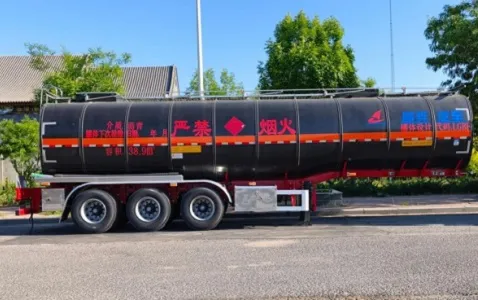
Recently, Hebei Changhua Star Vehicle Co., Ltd., a professional Chinese manufacturer of hazardous-material transportation equipment, released a technical corrosion-protection solution for tank bodies operating in coastal salt-spray environments. The solution provides a systematic analysis of the underlying mechanisms of salt-spray corrosion and common shortcomings in existing industry practices, while introducing tiered corrosion-protection solutions for a wide range of coastal and port operating conditions worldwide.
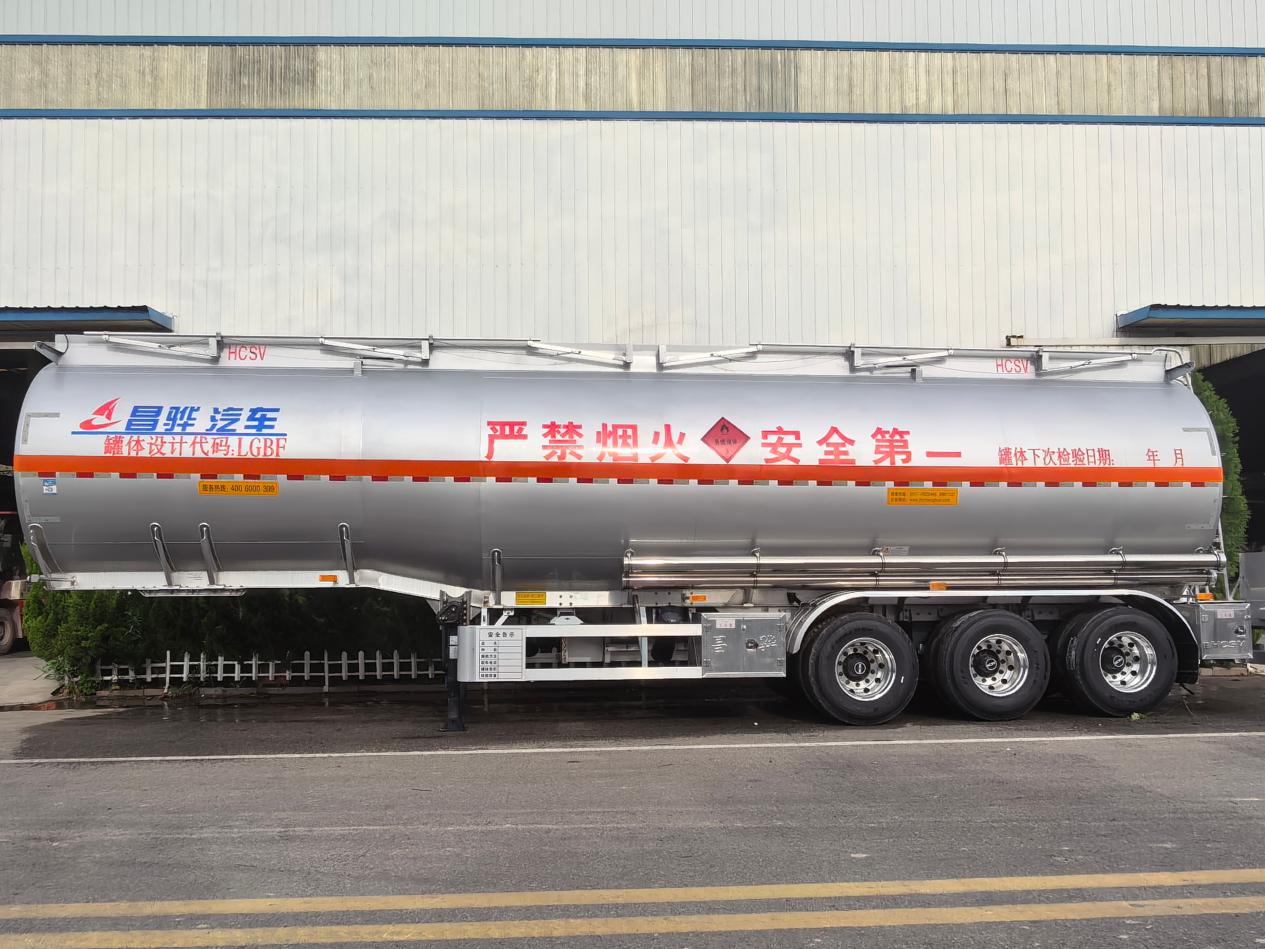
Why Salt Spray Accelerates Tank Corrosion
Salt spray is more than humid air. Its effect on a metal tank is an electrochemical corrosion cycle, and the corrosion rate can be five to eight times that of an ordinary inland atmosphere.
Marine aerosol generated by waves carries chloride ions that can pass through microscopic pores in an ordinary coating and reach the steel substrate. The ions damage the passive oxide layer on the metal. High coastal humidity and repeated wet-dry cycles maintain an electrolyte film on the surface, allowing the reaction to continue. Heat and ultraviolet exposure further age the coating and create additional paths for penetration.
Pitting is especially difficult to detect. A small rust spot at the surface can conceal a much deeper cavity. Under tank pressure and the alternating loads created by vehicle vibration, a pit can become the starting point for a crack. Industry data cited in the technical brief attribute about 60% of tank corrosion failures to stress-concentration areas such as welds, flanges, heads and manholes.
Why Ordinary Coating Systems Fail in Salt Spray
Many conventional tank-protection processes still rely on two coats of paint. Four weaknesses cause these systems to deteriorate quickly in coastal service.
· Inadequate surface preparation. Simple rust removal or manual grinding can leave mill scale and oil on the steel. Poor adhesion then allows salt spray to enter at the coating-steel interface and lift large areas of paint.
· An incomplete coating system. A primer-and-topcoat structure lacks an intermediate barrier layer. Ordinary epoxy or alkyd coatings may begin to chalk and crack after 1–2 years in a coastal environment.
· Insufficient protection at welds and edges. Welds, flanges, heads and manholes are easy to undercoat or miss during spraying. Unremoved weld slag and sharp edges also create starting points for corrosion.
· No electrochemical backup. Once a coating on a carbon-steel tank is damaged, the exposed point can form a local galvanic cell that accelerates corrosion. Many conventional builds do not include sacrificial-anode cathodic protection.
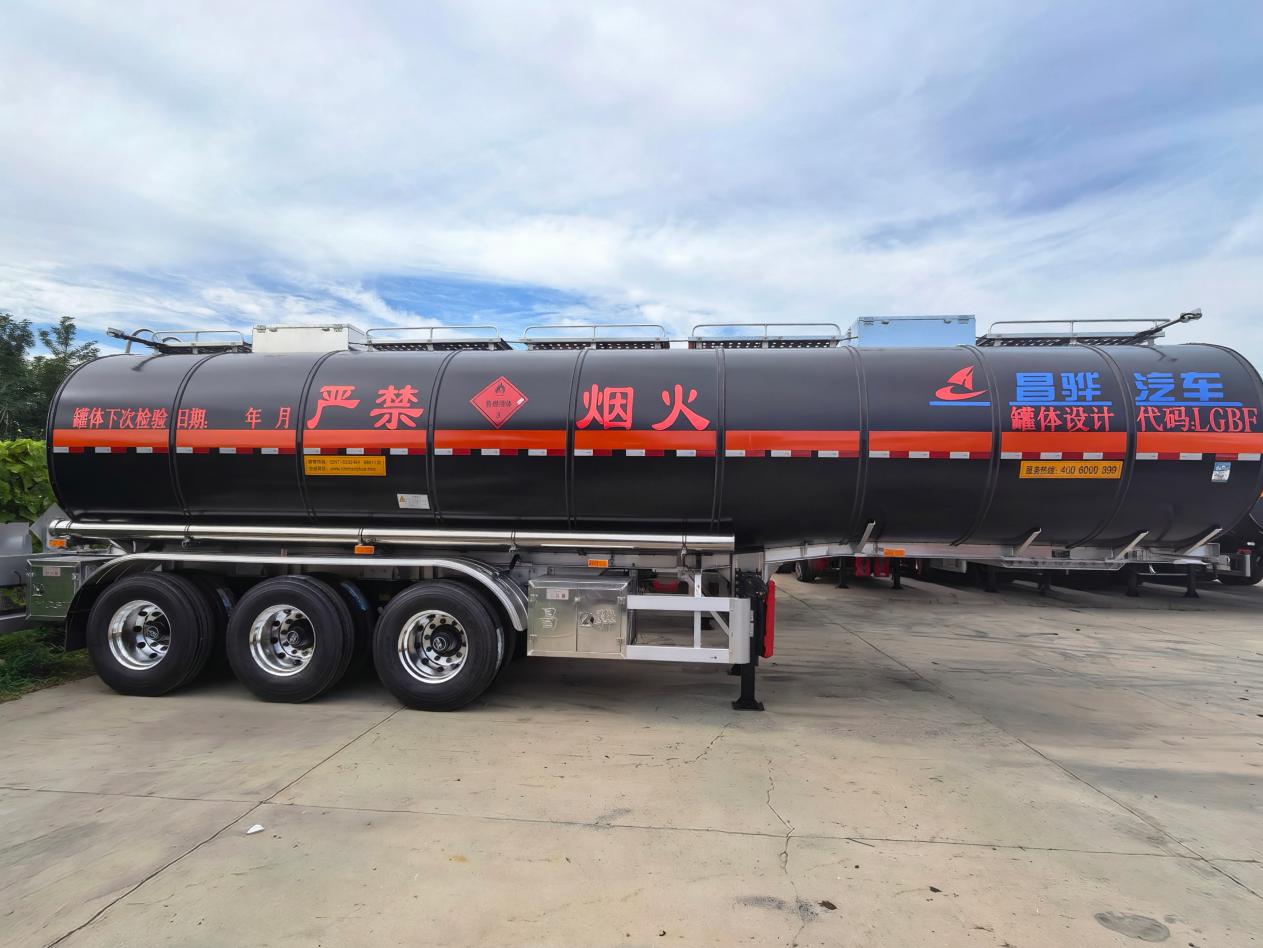
Five Process Differences in Coastal Grade Corrosion Protection
Corrosion protection for salt spray service is a system that begins with material selection and ends with inspection. Adding one more coat of paint does not address the underlying failure modes.
1. Sa 2.5 abrasive blasting. The complete external tank surface is blast-cleaned in accordance with GB/T 8923, with surface roughness controlled at 40–70 μm. Primer is applied within four hours of blasting to prevent flash rust and support coating adhesion.
2. Three-layer composite coating. For a marine atmosphere, the system combines zinc-rich epoxy primer, a micaceous iron oxide epoxy intermediate coat and a fluorocarbon topcoat. The primer provides cathodic protection. The plate-like micaceous iron oxide creates a tortuous path that slows chloride penetration, while the topcoat provides weather and ultraviolet resistance. The full system can meet more than 1,000 hours of neutral salt spray testing and is intended to extend coastal service life to several years.
3. Focused protection for welds and edges. Welds are ground smooth and weld slag and sharp edges are removed. Flanges, openings and other edges receive stripe coating before the full spray application so that dry-film thickness remains adequate in difficult areas. Accessories receive the same protection level to reduce galvanic corrosion.
4. Sacrificial-anode cathodic protection. Zinc or aluminum-alloy sacrificial anodes are installed at critical areas on the internal and external tank surfaces. If local coating damage occurs, the anodes help suppress the development of pitting and provide a second line of protection.
5. Inspection throughout production. Dry-film thickness, adhesion and pinholes are checked at each process stage. The finished coating undergoes high-voltage holiday detection, while critical welds receive 100% radiographic inspection. Hydrostatic and leak-tightness tests are completed before delivery in accordance with GB 18564.1, so visual appearance is not used as a substitute for verification.
HCSV Tiered Custom Solutions for Coastal Operating Conditions
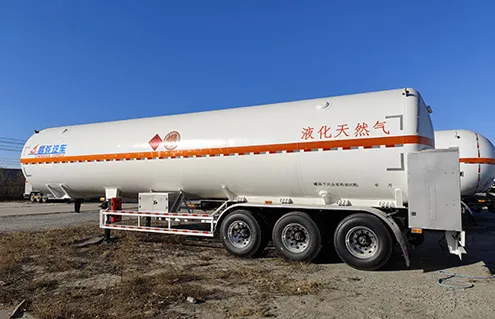
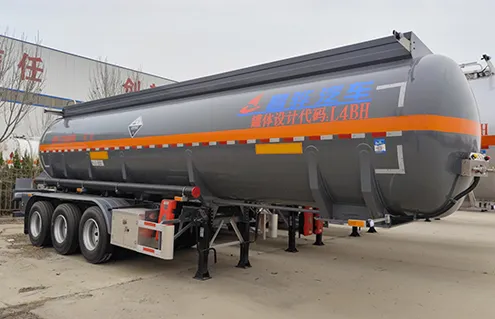
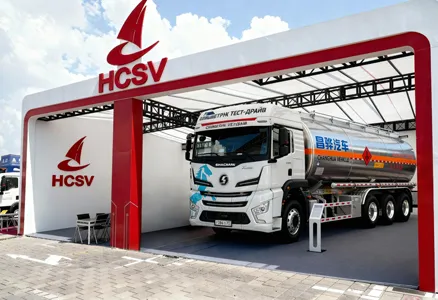
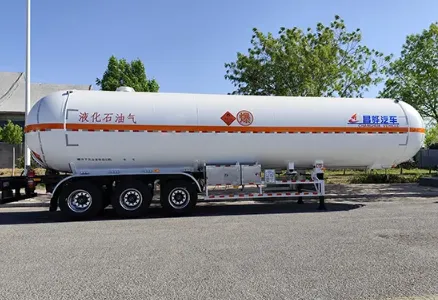
HCSV holds qualifications for both the design and manufacture of special equipment. Its product range covers atmospheric-pressure tankers, pressure-vessel tankers and cryogenic liquid transport equipment. For a chemical tanker trailer used near ports, the required protection level depends on both the external environment and the cargo carried.
· General coastal service. A standard three-layer corrosion-protection system verified through a 1,000-hour salt spray test.
· Ports and nearshore heavy salt spray. A thicker intermediate coat, sacrificial-anode system and additional weld protection, verified through a 1,500-hour cyclic salt spray test.
· Highly corrosive cargo. A 316L stainless steel tanker trailer or a special lining can address corrosion from the cargo on the inside and salt spray on the outside.
Tank production uses CNC plate rolling and robotic automatic welding. Main welds achieve a first-pass nondestructive testing acceptance rate of 99.8%. Automated spraying helps maintain consistent film thickness and reduces corrosion risk from the manufacturing stage.
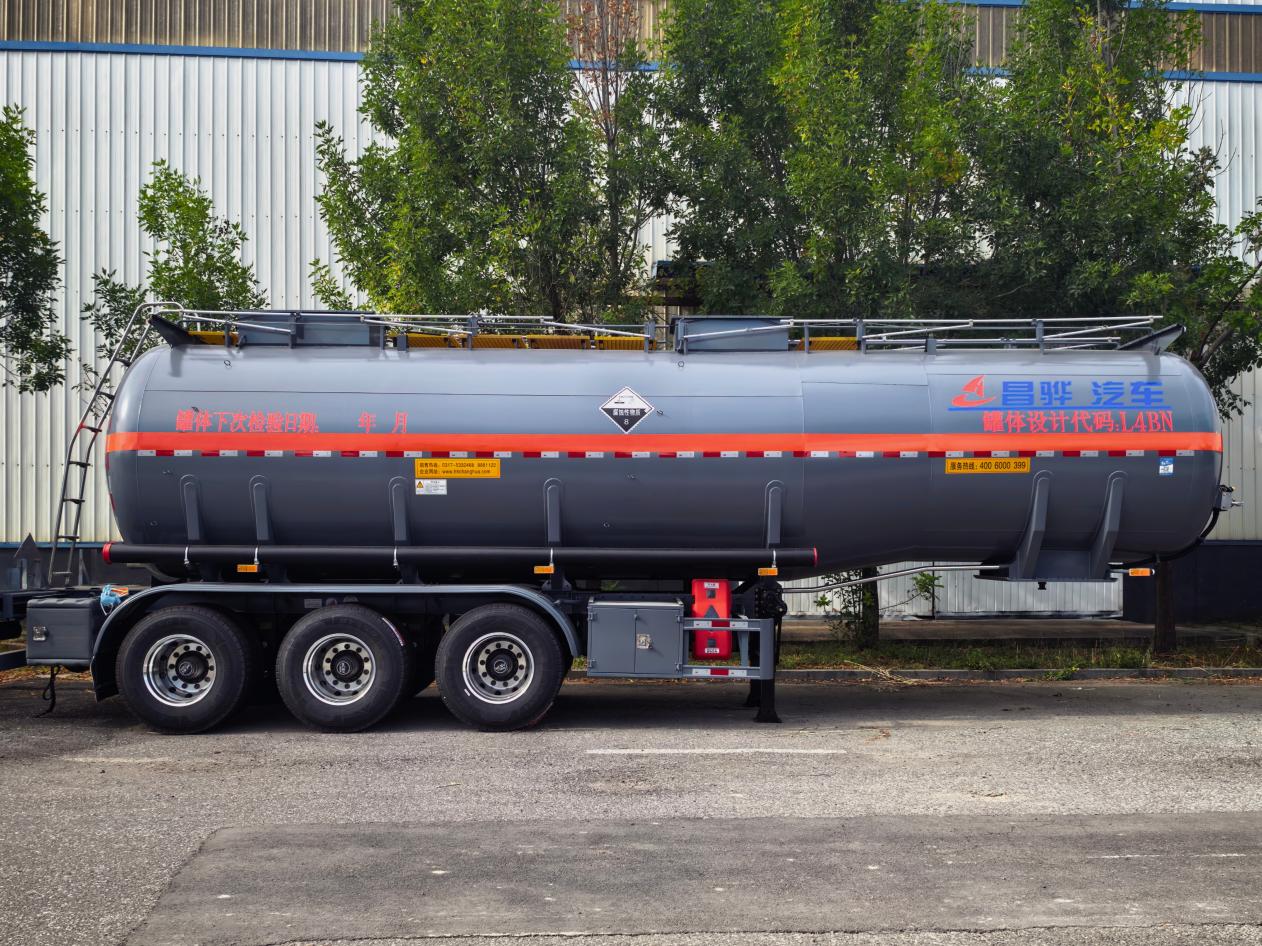
Maintenance Priorities in Salt Spray Environments
Even a well-specified corrosion-protection system depends on regular maintenance. Coastal fleet operators should focus on four practices.
· Remove salt deposits. After each port call or coastal journey, rinse the tank, chassis and piping with fresh water.
· Inspect vulnerable areas. Check welds, heads, flanges, supports and edges. Repair coating damage and rust spots promptly.
· Prevent mechanical damage. Avoid scraping the tank during loading, unloading and port operations because corrosion accelerates quickly once the coating is broken.
· Adjust the inspection interval. Shorten periodic inspection intervals where conditions warrant, with particular attention to wall-thickness measurement and nondestructive testing of welds.
Conclusion
Safety is the non-negotiable foundation of hazardous-material transport, and tank corrosion protection is the first line of defense. In coastal salt-spray environments, differences in corrosion protection may first appear as differences in coating life, but they ultimately reflect broader differences in material selection, manufacturing precision, process control and quality standards.
Guided by the principle of “Build the HCSV brand and build an enterprise that lasts a century,” HCSV applies strict manufacturing standards and a comprehensive quality system to provide each tank trailer with corrosion protection suited to its operating conditions. This helps vehicles operate safely and reliably in demanding environments, including coastal regions, high-altitude areas and deserts.
If rapid corrosion and shortened service life are affecting your coastal tank trailer operations, contact HCSV for a tailored tank solution and technical consultation.
 Hebei Changhua Star Vehicle Co.,Ltd.