In the fuel, chemical, and liquid logistics industries, companies often need to choose between rigid tank trucks and tanker semi-trailers for transportation. While both types of vehicles are designed to carry liquid cargo safely, their structure, capacity, and operational flexibility are quite different. Understanding the differences between these two transport solutions can help businesses select the most efficient and cost-effective option for their operations.
Rigid Tank Truck
A rigid tank truck is a self-contained vehicle with a cylindrical tank mounted directly on its chassis. The truck includes both the driving cab and the tank body as one integrated unit. Rigid tank trucks are commonly used to transport liquids such as fuel, water, milk, and chemicals. Because the tank is permanently attached to the truck frame, rigid tank trucks are often used for short-distance or local distribution. Smaller tank trucks may carry less than 3,000 gallons and are commonly used for municipal services, residential fuel delivery, or industrial supply within a local area.
Rigid tank trucks are widely seen delivering gasoline to service stations, transporting industrial liquids, or supplying water to construction sites.
Tank Semi-trailer
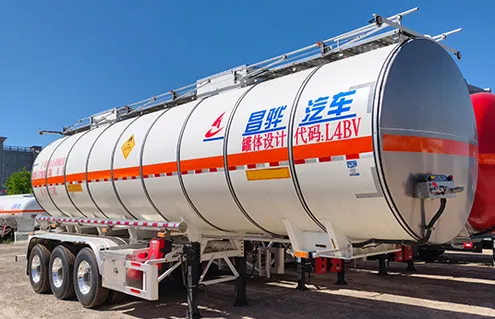
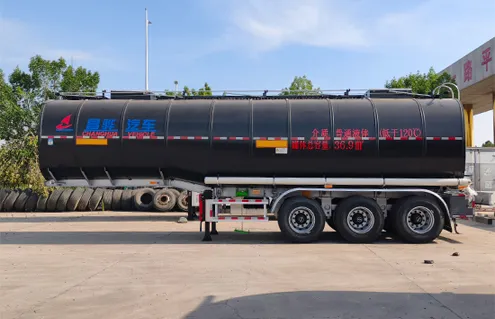
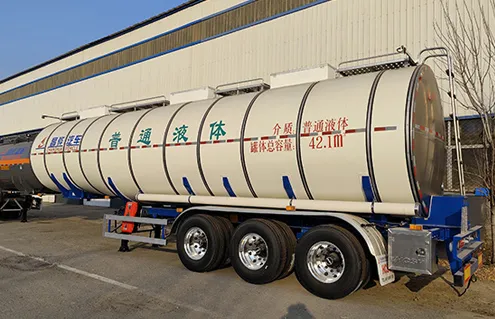
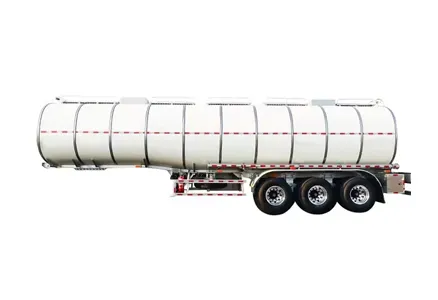
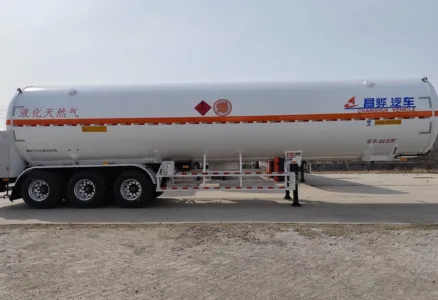
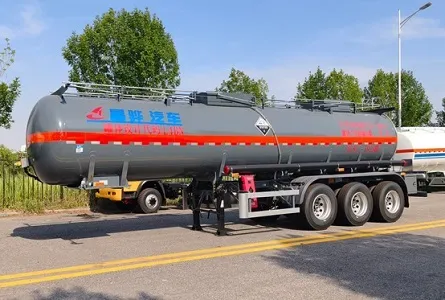
A tank semi-trailer is a separate tank unit that is pulled by a tractor head. Unlike rigid tank trucks, the trailer itself has no engine and relies on a tractor to move. Tank semi-trailers are specifically designed to transport bulk liquids such as petroleum products, chemicals, food-grade liquids, and industrial materials. They typically feature a cylindrical tank body with internal baffles that help stabilize liquid movement during transportation.
Because the tractor and trailer are separate components, tank semi-trailers offer greater operational flexibility and are commonly used for long-distance transportation and high-volume logistics.
Key Differences
Although both vehicles serve the same general purpose, their structural design leads to several important differences.
1. Structure and Design
The most obvious difference lies in their structure.
A rigid tank truck integrates the tank and vehicle chassis into a single unit, meaning the tank cannot be detached from the truck. Tank semi-trailers, on the other hand, are separate units that connect to a tractor through a fifth-wheel coupling system. This separation allows tanker semi-trailers to be swapped between different tractors when needed, improving fleet management efficiency.
2. Capacity
Capacity is one of the biggest differences between the two transport options.
Rigid tank trucks usually carry smaller volumes, making them ideal for urban deliveries or short transport routes. Large tank trucks may carry several thousand gallons of liquid, depending on the design. Tank semi-trailers, however, are designed for bulk transportation and typically hold much larger volumes. Many petroleum tanker semi-trailers can carry 5,000 to 10,000 gallons or more, depending on regulatory limits and tank configuration. This higher capacity allows companies to transport more fuel or liquid per trip, improving overall logistics efficiency.
3. Operational Flexibility
One major advantage of tanker semi-trailers is their flexibility.
Since the tractor and trailer are separate units, companies can use one tractor to pull different trailers depending on the cargo type or logistics demand. This modular approach helps reduce downtime and improves fleet utilization. In contrast, rigid tank trucks are single units, which means the entire vehicle must be dedicated to a specific purpose.
4. Maintenance and Fleet Management
If a rigid tank truck requires repairs, the entire vehicle is taken out of service. However, if a tanker semi-trailer requires maintenance, the tractor can still be used with another trailer. This flexibility makes tanker semi-trailers particularly attractive for large logistics fleets and fuel distribution companies.
When is a Rigid Tank Truck the Better Option?
Despite their smaller capacity, rigid tank trucks remain a practical choice in several scenarios:
Local fuel delivery
Municipal services such as water supply or septic transport
Small-volume industrial deliveries
Urban environments with limited road space
Their compact design allows them to maneuver easily in tight spaces and city streets.
When a Tank Semi-trailer is the Better Choice?
For companies that require large-scale liquid transportation, tanker semi-trailers often provide clear advantages.
Tanker semi-trailers are commonly used for:
Long-distance fuel transportation
Bulk chemical logistics
Industrial liquid transport
Large-volume supply chains
Their higher capacity and detachable design make them ideal for businesses that prioritize efficiency and scalability.
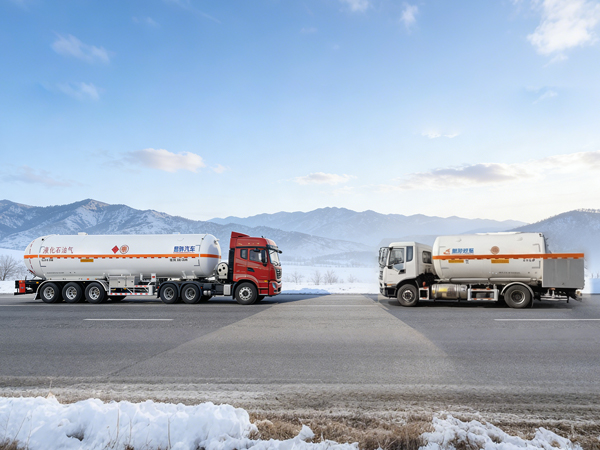
Manufacturers such as HCSV offer specialized tanker semi-trailer solutions designed for different industries and transport requirements. Their models are built for durability, safety, and high-volume liquid transportation.
Both rigid tank trucks and tanker semi-trailers play important roles in liquid transportation, but they serve different operational needs. Rigid tank trucks are typically better suited for local distribution and smaller loads, while tanker semi-trailers are designed for long-distance transport and higher cargo capacity. By understanding these differences, businesses can choose the solution that best matches their logistics requirements. For companies looking to move large volumes of fuel or liquid cargo efficiently, tanker semi-trailers often provide the flexibility, capacity, and operational efficiency needed to support modern supply chains.
 Hebei Changhua Star Vehicle Co.,Ltd.